The Origin Story
You started with just €300, a page on TripAdvisor, and no advertising. What made you believe this would work when most people would have hesitated?
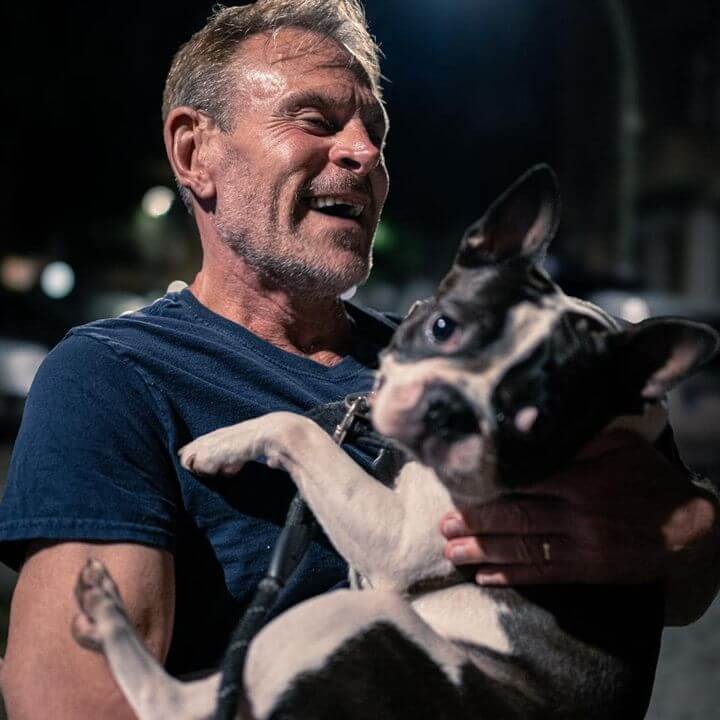
Chef Karl Wilder: I had nothing to lose and everything to gain. My novels sell well enough to keep me fed, and I thought, why not? Let’s create something that makes people go wow and see if they talk about it enough to make us go wow, and that is exactly what happened. Our guests were our marketing. Their Facebook pages, their TripAdvisor reviews, and their Instagram became our success story.
We began in Paris with one small tour and a few curious guests. We now have two tours in Paris and are seeking additional chefs to work with. There are eighteen distinct arrondissements in Paris, and we would love to have each covered by a different chef.
Early Days
In the beginning, how did you convince those first few guests to take a chance on something unknown?
Chef Karl Wilder: We just put it out there on TripAdvisor and a home-built website. We got lucky; people were searching for more immersive experiences than eating a piece of a croissant on a street corner, and they found us.
The Turning Point
Was there a specific moment when you realized this wasn’t just a side project, but something that could scale into multiple cities?
Chef Karl Wilder: When I opened in Seville and began to see guests from our Paris tours coming to Seville to take our tour and asking me, “What city is next?”, our guests are passionate and loyal and want to see us replicate remarkable experiences in many cities.
The Concept
There are thousands of food tours out there. What exactly makes The Chef Tours different in practice, not just in marketing?
Chef Karl Wilder: Our groups are small, chef-led, and immersive. Small groups allow access that the large groups do not. But our real success comes from our chefs. Chefs tell stories; guides memorize scripts.
The Philosophy
You’ve deliberately avoided the typical “tapas and tourist stops” format. How do you decide what not to include in your tours?
Chef Karl Wilder: In each city, I take many different tours and purposefully stay away from most of the neighborhoods, restaurants, and food choices on those tours. I decide what not to include by seeing what others include. That is why there are no patatas bravas on the Seville tour, or any other cheap carbohydrate stops.
The Role of the Chef
Why was it so important that these experiences be led by chefs rather than traditional guides?
Chef Karl Wilder: Because a chef doesn’t just talk about food, they understand it at a level a guide simply can’t.
A traditional guide can tell you where something comes from. A chef can tell you why it tastes the way it does, how it’s made, and what makes it exceptional.
That changes everything. It means:
- You’re not just eating, you’re understanding
- You’re not following a script, you’re having a conversation
- You’re not being shown the obvious; you’re being shown what actually matters
It also raises the standard. A chef isn’t going to walk guests into a mediocre kitchen or serve something forgettable. There’s a level of professional pride involved that naturally filters out the typical tourist stops.
And maybe most importantly, chefs are part of the industry. They have access, relationships, and insight that guides don’t. They know where the genuine quality is, often before it becomes visible to the public.
So the experience stops being a tour and becomes something closer to being taken around a city by someone who lives and breathes its food scene every day.
Word of mouth growth
You’ve grown through guest sharing and reviews. What do you think makes people want to talk about your tours after they’ve taken them?
Chef Karl Wilder: In Paris, PJ gives the guests’ breakfast, takes them through his day shopping as a chef, creates a multi-course meal, a cheese tasting, a dessert tasting, and they have at least 5 wines. Wouldn’t you talk about that?
We are a memorable experience company.
Expansion Strategy
From Paris to Seville, Berlin, and beyond: how do you choose which city comes next?
Chef Karl Wilder: This may sound mystical, but we don’t choose the cities; the cities choose us. Of course, we look at data, tour numbers, search numbers, etc. But once that is done, we go where we feel compelled to go. We go where the muses of tourism guide us.
Challenges
What has been the hardest part of scaling this kind of business internationally?
Chef Karl Wilder: The hardest part is maintaining quality while letting go of control. Each Chef we bring on is responsible for his or her own city, and as long as the guests are happy, I try to stay hands off.
In the early days, everything ran through me. I chose every stop, tasted every dish, shaped every moment. The experience is consistent because it’s personal.
Once you expand internationally, that changes. You’re relying on chefs in different cities, different cultures, different standards. Even great chefs don’t automatically deliver a great experience. Cooking and hosting are not the same skills.
So the challenge becomes building something that can scale without becoming generic. You need systems, but not so many that you kill what made it special in the first place.
There’s also the operational side. Every city has its own way of working. Different regulations, different restaurant relationships, different expectations from guests. What works in Paris doesn’t automatically work in Seville or Berlin. Each chef runs the operations in their city.
But the real difficulty is this: I am not just scaling a product, I am scaling a feeling. And feelings are much harder to standardize than logistics.
Personal Involvement
In Berlin, you cook personally for guests. Why keep that hands-on approach instead of stepping fully into a management role?
Chef Karl Wilder: I am half German and Berlin is a very personal tour for me, and I could have easily handed it off to another chef and stayed at the computer, but I love sharing with the guests, and I love cooking for the guests, even though I make less than minimum wage with the time I put in, I have shared my life and my city with some extraordinary people. We may be in the business of giving guests an experience, but the guests give us one as well, and I treasure my time with them.
The Experience
If someone joins one of your tours, what’s the moment you hope they remember most?
Chef Karl Wilder: It’s not one specific dish or stop; it’s the moment when they realize this isn’t a typical tour.
Usually, it happens somewhere in the middle. The group relaxes, the conversation opens up, and they stop thinking like tourists. They’re just enjoying great food, good wine, and being part of something that feels a bit more personal and real.
That’s the shift.
If they leave remembering a single bite, that’s great. But what I really want is for them to remember how it felt. The sense that they were let in on something, not just shown around.
That’s the moment that stays with people, and it’s the one they end up talking about later.
The Future
With new cities like Buenos Aires on the horizon, what does success look like for you in the next few years?
Chef Karl Wilder: Success isn’t just adding more cities; it’s adding the right ones and doing them properly.
In the next few years, the goal is to build a presence in cities where the food scene is strong and still feels discoverable. Places where we can offer something that doesn’t already exist in a polished, mass-market version.
It also means finding the right chefs. Not just talented in the kitchen, but also people who can host, tell stories, and connect with guests. That’s what makes or breaks the experience.
Beyond expansion, success is consistency. If someone joins a tour in Paris and then books again in Mexico City or Buenos Aires, the feeling should be the same. Not identical, but recognizably ours.
If we can grow into a global brand without losing that sense of intimacy and authenticity, that’s success.
Final Question
From €300 to a global brand what’s the one thing you’ve learned that most people get wrong about building a business in travel?
Chef Karl Wilder: Most people think you grow a travel business through marketing. You don’t. You grow it through the experience.
If the experience is average, you’ll always be chasing customers with ads, discounts, and gimmicks. It becomes a constant uphill battle.
If the experience is genuinely memorable, people will do the marketing for you. They share it, recommend it, and come back again. That kind of growth is slower at the beginning, but much stronger over time.
The mistake is focusing on visibility before you’ve built something worth talking about.
