Hotel Wi-Fi feels like part of the room now, as expected as clean sheets, hot water and a quiet lobby. Travelers use it to check maps, upload photos, confirm bookings and open banking apps between two flights. The danger is not panic-worthy, but it is real enough to deserve a place in the travel checklist.
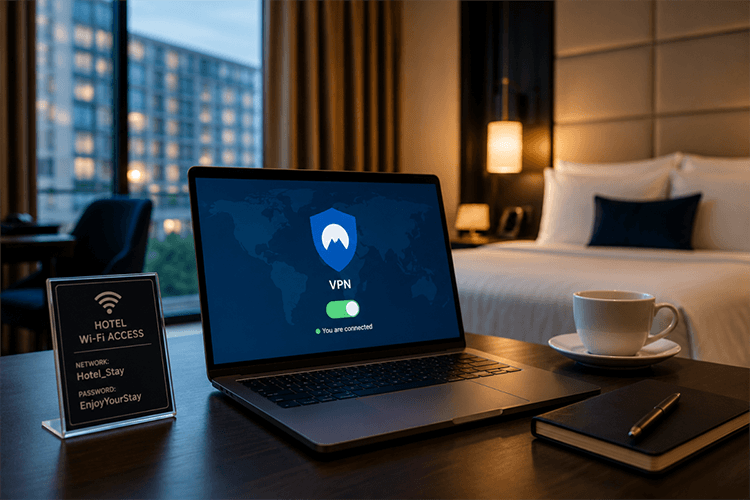
The lobby is not private
The most comfortable connection is often the one travelers trust too quickly. A hotel network looks official because it carries the property name, opens from the room and asks for a surname or room number. That small ritual creates reassurance, yet it does not tell guests how the network handles traffic, how many people share it or whether a fake hotspot nearby copies its name.
The U.S. Federal Trade Commission reminded consumers in 2026 that widespread website encryption has made public Wi-Fi safer than in the past, but it still advises users to check for HTTPS and to remember that mobile apps do not always make encryption easy to verify. In other words, hotel Wi-Fi is not automatically dangerous, but it is not a private tunnel either. For a full breakdown of what the FTC currently recommends, their guide to public Wi-Fi safety is one of the clearest official resources available.
For travelers who work on the road, the risk grows because a hotel room now doubles as an office. A quick invoice check, a cloud login or a message to a bank can carry far more value than a holiday photo. Before leaving for a trip, installing security tools through a trusted VPN software download gives travelers one extra layer when they connect from a lobby, airport lounge or rented apartment.
The point is not to turn every trip into a cybersecurity exercise. It is to treat internet access like a passport or a payment card. Useful, often necessary, and worth protecting before something goes wrong.
Scams travel with the suitcase
Cybercrime has become too expensive to ignore. The FBI reported in April 2026 that its 2025 Internet Crime Report recorded more than one million complaints of suspected internet crime and losses above 20 billion dollars, a 26 % increase from 2024. Those numbers do not describe hotel Wi-Fi alone, but they show the financial environment in which travelers now move.
A trip creates perfect timing for mistakes. People rush, roam between networks, accept pop-ups, click confirmation emails and use shared connections while tired. A traveler may think about lost luggage, a missed train or a late check-in, while a criminal thinks about credentials, payment details and reused passwords. The gap between those two mindsets is exactly where trouble starts.
Hotel guests can reduce exposure with simple habits. They should verify the official network name with reception, avoid automatic connection to open networks, keep devices updated and use mobile data for sensitive tasks when possible.
Families and luxury travelers face the same basic issue. More devices mean more connections, from phones and tablets to laptops and children’s consoles. A hotel Wi-Fi password written on a card at reception may feel convenient, but convenience should not replace judgment. Good travel planning now includes digital hygiene, not as a technical obsession, but as part of staying calm abroad. A solid starting point is the pre-trip packing routine: our 10 tips for packing like a travel pro include a section on keeping valuables and electronics secure.
