Most tourists land in Tuscany with the plan to visit the Uffizi, Ponte Vecchio, and try a gelato on Via dei Calzaiuoli. Hard to blame anyone, Florence is magnificent. But the actual Tuscany starts exactly where the standard itinerary runs out. Savvy travelers plan deeper routes and also reach DMC Travel, who help to explore itineraries around the region’s backcountry with comfort.
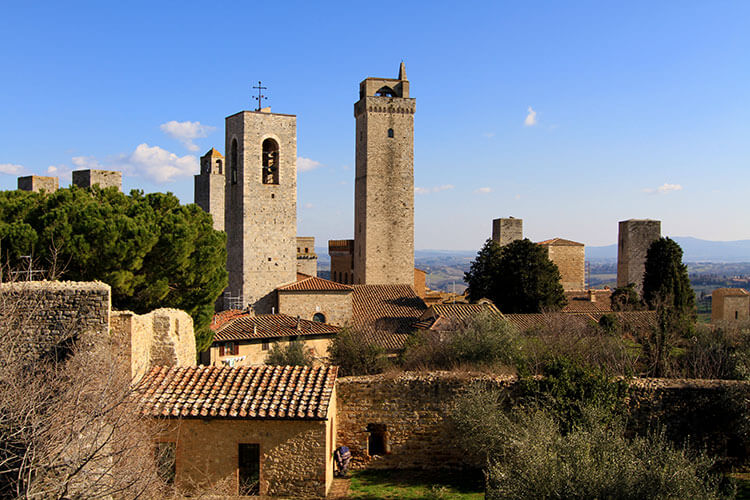
San Gimignano: Something Like The Medieval Manhattan
San Gimignano towers were built in the 12th and 13th centuries, each commissioned by a separate affluent family (less for defense, more for prestige – the higher your tower, the louder your point). There were about 70 of them, but only fourteen survived. Walk in through the main gate today and the town feels surprisingly unbothered by its own history – a real butcher, a crowded market on Thursdays, a wine bar where the owner refills your glass before you ask.
That wine, by the way, has a history worth knowing. Vernaccia di San Gimignano became Italy’s first DOC-designated wine in 1966 – long before the rest of the region figured out the paperwork. The dry, slightly bitter finish comes from galestro, the local soil – thin, stony, and almost aggressively well-drained. Vines planted in it don’t get comfortable. And apparently, that stress produces something worth drinking.
Don’t forget to try those chef d’oeuvres:
- Cinghiale in umido – wild boar braised with juniper and local red wine, served pretty much everywhere and genuinely excellent everywhere too;
- Saffron pici – thick hand-rolled pasta with saffron, which the town traded commercially as far back as the 13th century.
Tourist peak hits hard in July and August. Come in May or late September and the streets are practically yours.
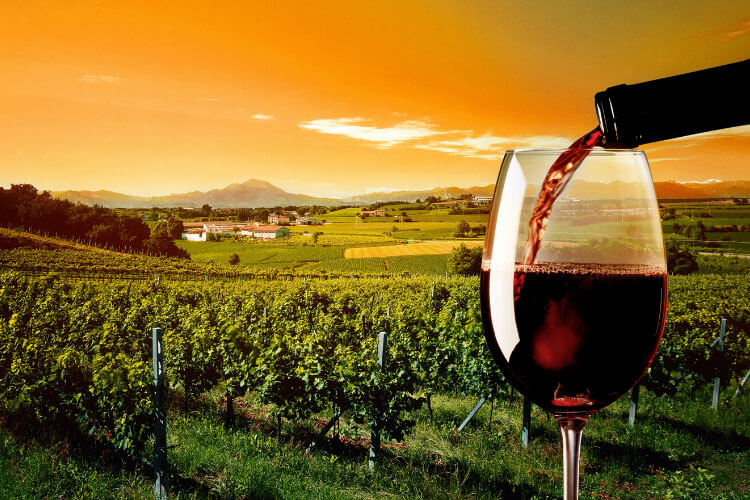
Chianti: Not Just a Wine
Drive the back roads between Florence and Siena and you’ll pass more wineries than petrol stations. That’s not an accident – the Chianti Classico zone has been producing wine on these 72,000 hectares for over seven centuries, and the roughly 500 producers working here today range from medieval castle estates to small-batch operations run out of converted farmhouses.
It’s the kind of place that quietly rewires how you think about Italian wine. “Tuscan wine” starts to feel like a vague umbrella term. What these producers make is specific: a particular hillside, a particular family, a particular year. That specificity is, frankly, half the point of coming.
Sangiovese anchors everything, but the variations are staggering. Castello di Brolio – one of the oldest wine estates, with roots in the 11th century – makes a completely different Chianti Classico than boutique producer Fontodi or the austere, minimalist Montevertine. Same grape, same zone, entirely different universes. Worth exploring that gap seriously.
The best way to get there is by bicycle along Strada Chiantigiana. The route from Florence runs roughly 80 kilometers and elevation gain is real: some sections sit above 600 meters! But the views over terraced vineyards from those ridgelines are the kind that stay with you longer than most photographs.
Thermal Spas: Go When Body Demands It
At some point the body stops being polite about it. Sore legs, tired feet, one too many hours standing on stone floors swirling glasses. Tuscany saw this coming. The location is situated above a volcanic belt, with geothermal water pushing up through it at 37 to 52 degrees Celsius.
Bagno Vignoni is really unique: a Renaissance-era town with an open hot pool created under the Medici. A town square you swim in. Montecatini Terme has been treating visitors since 1773 and offers balneological programs with clinically documented benefits for liver and digestive conditions – this isn’t spa marketing, it’s actual medicine with a long paper trail.
Saturnia is probably the most famous stop: the Cascate del Mulino cascades are free, open around the clock, and hold a constant 37.5°C. The water is naturally rich in hydrogen sulfide and carbon dioxide. Weekends get crowded. Arrive at sunrise – it’s one of those rare travel moments that doesn’t need a filter.
Tuscany runs at multiple speeds. Florence is a sprint – vivid, dense, over fast. The Chianti hills, the towers of San Gimignano, the steaming cascades at Saturnia – those are a slow marathon, the kind you find yourself wanting to stretch indefinitely. And if you think about it, that slower pace is precisely where the region reveals what it actually is.
