Portugal squeezes an improbable number of native grapes into a small country, and no city puts more of them within walking distance than Lisbon. Port is poured seriously in the city center, Vinho Verde and Alentejo reds fill every list, and a historic coastal wine region sits under an hour away. You do not need a rental car, a tour bus, or a trip north to drink very well here. Three days is enough, if you plan them around wine from the start. The shape of this itinerary: Bairro Alto and Port on day one, Alfama and the wine bars of Chiado on day two, Sintra and the sand-grown vines of Colares on day three.
Your base matters more than usual on this itinerary, because the best tasting room in the city is inside a hotel. Palácio Ludovice occupies an 18th-century palace at the top of Bairro Alto, built as the private residence of João Frederico Ludovice, court architect to King João V, and later the headquarters of the Port Wine Institute. Now a five-star boutique hotel, it keeps the Institute’s public Lisbon tasting room on the premises, with around 150 Ports open for tasting. Sleep upstairs from the bottles and the whole city rearranges itself around you.
Day 1: Bairro Alto and 150 Ports
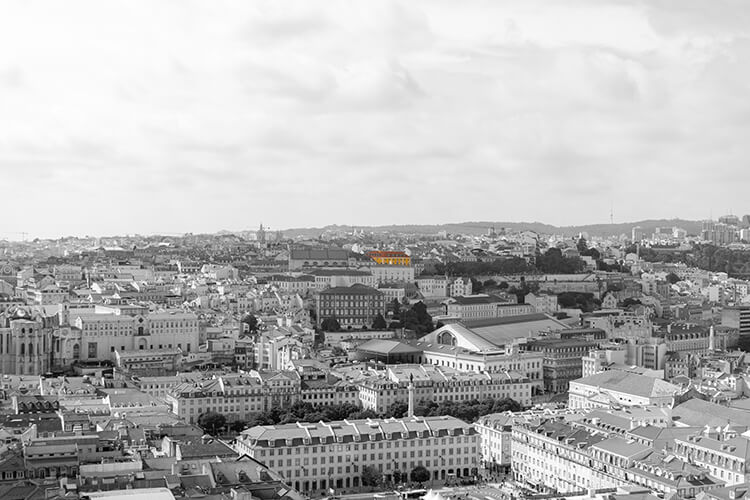
Start slow and local. The Miradouro de São Pedro de Alcântara sits directly across the street from the palace, a terraced garden with the lower city and São Jorge Castle laid out below, and it is at its best before the tour groups find it. Give the Igreja de São Roque, two minutes away, half an hour: behind an austere facade waits an interior of carved and gilded chapels, including one that King João V had built in Rome and shipped to Lisbon in pieces; the small museum beside it keeps the chapel’s Italian silver. Five minutes farther up the hill, the garden square of Príncipe Real spreads beneath an enormous cedar whose branches are trained flat over an iron frame, with antique shops around its edges.
Wander downhill through Chiado before lunch. Livraria Bertrand on Rua Garrett holds the Guinness record as the world’s oldest working bookstore, open since 1732, and the roofless Gothic shell of the Convento do Carmo still stands as the 1755 earthquake left it. For lunch, the palace’s concierge list includes Sea Me, a contemporary fish house on Rua do Loreto, and Bairro do Avillez in Chiado, which gathers several dining concepts under one roof.
The afternoon is the headline. Back at the palace, the Port Wine Institute’s tasting room, the Solar do Vinho do Porto, keeps roughly 150 Ports available, from dry whites to decades-old tawnies and vintage bottlings. A self-pour wall suits tasters who want to roam; book a guided wine tasting if you want the categories mapped out by a professional. A chilled white Port lengthened with tonic has become the city’s unofficial aperitif; the wall lets you taste the base neat first. Pace yourself: the useful progression runs white and chilled first, aged tawnies in the middle, vintage last.
A one-minute map of the styles, since the wall offers all of them: white Port is the aperitif of the family, young and cold; ruby stays dark and fruit-forward; tawny ages in wood toward caramel and walnut, sold at 10, 20, 30, and 40 years; Late Bottled Vintage delivers the vintage idea at a fraction of the price; and true vintage Port, declared only in exceptional years, is the bottle you decant and discuss for the rest of the trip.
Dinner is downstairs at Federico, the hotel’s restaurant, which serves contemporary Portuguese cuisine, reimagining tradition, and holds a Michelin Key, kept for a second straight year in 2026. Afterward, walk a few streets into the grid to O Faia on Rua da Barroca, a longtime name on the concierge team’s list, for a late dinner with live fado. House rule: when the singing starts, the room goes silent, and you should too.
Day 2: Alfama in the Morning, Wine Bars After
Cross the valley early and give the morning to Alfama, the medieval tangle below the castle. The Sé, Lisbon’s fortress-like cathedral, anchors the lower edge; from there the lanes climb past laundry and tiled facades toward the Miradouro de Santa Luzia and, if your legs agree, São Jorge Castle at the top. Buy the castle ticket online and go at opening, or settle for the free viewpoints, which give up most of the same panorama. The tiled panels on the Santa Luzia terrace map old Lisbon before the earthquake, a two-minute history lesson on a wall, and the Portas do Sol terrace next door serves the postcard version with coffee. At the foot of the hill, the Museu do Fado explains the music you heard the night before.
Come back across for an afternoon built around glasses rather than sights. By the Wine, on Rua das Flores in Chiado, is the Lisbon flagship of José Maria da Fonseca, one of the country’s oldest producers, and its barrel-vaulted ceiling lined with thousands of green bottles is reason enough to visit; order a Moscatel de Setúbal and taste why the house made its name sweet. A few streets into the Baixa grid, Garrafeira Nacional stocks back vintages of Port and Madeira going back generations, the right stop if a bottle is coming home in your luggage. Serious shops here will wrap bottles properly for checked bags, and past two or three, shipping usually beats carrying.
For dinner, stay flexible: the palace’s front desk keeps a short, current list of tables worth booking and can arrange private food tours led by hand-picked local guides if you would rather eat your way through the city with company. End the night back at the palace: one pour at the self-pour wall before bed is a habit three days can justify.
Day 3: Sintra, Then the Vineyards in the Sand
Take the train from Rossio station; Sintra is about 40 minutes out. The hill town and its palaces soak up the crowds, so pick one headliner, Pena Palace or Quinta da Regaleira, book a timed ticket, and go at opening rather than trying to do both; if palaces split the group, the walls of the Moorish Castle deliver the wide views with half the queue. Pena rewards from the outside even if you skip the staterooms; Regaleira hides the spiral initiation well that fills every photo feed for a reason.
Then do what most day-trippers skip. A short taxi ride toward the coast reaches Colares, Europe’s westernmost wine region, where pre-phylloxera Ramisco vines grow ungrafted in deep sand, planted in trenches so their roots can reach the clay below and shielded from the Atlantic wind by reed fences. The Adega Regional de Colares, the cooperative founded in 1931 that was, from 1934 to 1994, the mandated winemaker for the entire appellation, pours Ramisco reds and Malvasia whites made almost nowhere else on earth: light in color, bracing in acidity, shaped by the ocean. If lunch calls first, the clifftop village of Azenhas do Mar, white houses stacked above a sea pool, is a short drive farther up the coast.
Trains run back into the evening, leaving time for sunset on the miradouro across from the hotel and one last glass at the wall. Dinner at Federico or out in the grid closes the loop.
Where to Base Yourself
This itinerary was built from one address on purpose. From Palácio Ludovice’s front door, everything in Day 1 sits inside a twelve-minute walk, the Chiado wine bars are eight minutes, and Rossio station for the Sintra train is eight minutes downhill, so the base does the logistics for you.
And the honest note: the district is quiet by day and loud by night, with the bars winding down between 2 and 3 a.m. on weekends. The palace sits above that at the garden end, and light sleepers can simply ask for a room on the inner courtyard side; the concierge team is used to the question and has answers.
With an Extra Day: Azeitão and the Setúbal Cellars
If the Moscatel at By the Wine hooked you, its source is an easy half day south of the river. In the village of Azeitão, José Maria da Fonseca has been making wine since 1834, and the historic family cellars run tours and tastings built around Moscatel de Setúbal in all its ages. Pair it the local way, with a wedge of Azeitão sheep cheese, a protected-origin product in its own right.
Count roughly an hour door to door across the bridge by car or rideshare, and book the cellar visit a day or two ahead.
Know Before You Go
Getting there and around: the center is compact and walkable, with the metro and trains covering the rest, and the hotel arranges airport transfers through its front desk. Sintra trains leave from Rossio, an eight-minute walk downhill from the palace. Lisbon’s polished cobblestones are slick even when dry, so pack shoes with grip.
When to go: Lisbon is a year-round city, but wine travelers get extra value from late September and October, when the harvest is in and the new vintage dominates conversation. Whatever the month, book the Solar’s guided wine tastings and any Colares cellar visit a few days ahead rather than on arrival.
Month by month, briefly: spring and fall are the sweet spots for walking this many hills; July and August run hot and crowded; winter is mild with rain in bursts, and the tasting room does not care about the weather.
