A Nile River cruisefrom Luxor to Aswan is the classic four-night, five-day upstream route through Upper Egypt, and it’s more tightly scheduled than most tour pages let on. This is a typical framework rather than a guaranteed timetable; sailing conditions, lock passage, docking windows, and excursion order shift by vessel and departure date.
What follows is the realistic version of Nile Cruise: daily pacing, where the schedule gets intensive, which experiences are worth paying extra for, where to protect downtime, and the booking questions that separate a well-run four nights from a rushed one.
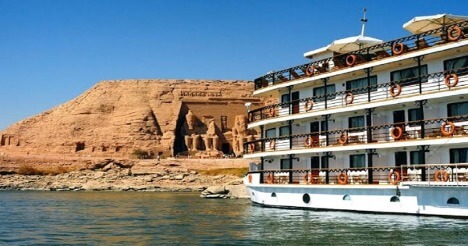
How the Four-Night Luxor-to-Aswan Route Actually Works
| Day | Main experience | Typical overnight |
| Day 1 | Embarkation and Luxor East Bank | Luxor |
| Day 2 | Luxor West Bank and sailing | Esna or en route |
| Day 3 | Edfu and Kom Ombo | Kom Ombo or Aswan |
| Day 4 | Aswan and Philae | Aswan |
| Day 5 | Disembarkation or extension | _ |
Published schedules from major Nile operators, including Sonesta’s own Luxor–Aswan itinerary, follow this broad structure. Departure days, exact site sequencing, and precise times still differ ship to ship.
One clarification worth making early: a published itinerary shows you the daily schedule, but it doesn’t automatically mean every entrance ticket and guide fee is included in the base cruise rate. Confirm inclusions ship by ship rather than assuming a listed stop means the ticket is already covered.
Why Arriving in Luxor the Previous Night Improves the Journey
For anyone connecting through Cairo or flying in internationally, a pre-cruise Luxor night solves several logistical problems before they happen. Many ships require embarkation around midday and start East Bank sightseeing that same afternoon, which leaves very little margin for a delayed flight.
Arriving the night before gives you:
- Reduced risk of missing embarkation entirely
- Real recovery time after a red-eye or overnight train
- Room for an independent Luxor Museum visit before the group schedule starts, offering a quieter look at some of Egypt’s finest antiquities.
- Easier hot-air balloon scheduling for Day 2
- Less pressure crammed into Day 1
- Time to confirm luggage handling and transfer arrangements directly with the ship
Understand What Four Nights Includes
The typical Nile cruise product name is a little misleading. Four nights normally means five calendar days, four nights aboard, embarkation before lunch on Day 1, and disembarkation after breakfast on Day 5, which works out to roughly three full sightseeing days plus two partial ones.
Don’t confuse this with a 5-day Egypt package, which may bundle in hotel nights rather than four consecutive nights aboard the ship.
Important: Ask specifically how many nights are spent on the vessel versus in a hotel before comparing two quotes.
Day1: Boarding in Style and Exploring Luxor’s East Bank
The first day runs on a tight but manageable rhythm: morning pickup, embarkation before lunch, cabin orientation, lunch onboard, then afternoon sightseeing on the Luxor East Bank. Many current four-night programs schedule Karnak and Luxor Temple for that same afternoon, right after boarding.
Karnak Temple: Choose Depth Over Speed
Karnak Temple Complex is enormous, and pairing it with Luxor Temple in one afternoon can feel rushed. Prioritize the Great Hypostyle Hall, the Sacred Lake, and two or three standout reliefs rather than trying to see everything.
A private Egyptologist earns their keep here; Karnak rewards someone who can explain what you’re looking at rather than a scripted group walkthrough. If a longer, unhurried visit matters to you, a return trip on a pre-cruise day is worth considering.
Luxor Temple Near Dusk or After Dark
Luxor Temple changes character after dark: softer light, illuminated columns, and a direct connection to the Avenue of Sphinxes, the ancient processional route linking Luxor Temple to Karnak Temple. The ship’s schedule controls the exact timing, so don’t count on a guaranteed sunset visit, but it’s worth asking whether the East Bank sequence can be adjusted privately if evening light matters to you.
Day 2: Exclusive Sunrise Adventures and West Bank Wonders
This is the most physically demanding day of the cruise: an early breakfast or breakfast box, the Valley of the Kings, Hatshepsut Temple, the Colossi of Memnon, a return for lunch, then sailing toward Esna in the afternoon. Current itineraries commonly start West Bank sightseeing between roughly 6:00 and 7:30 a.m.
Hot-Air Balloon at Sunrise Worth It, but Not Effortless
Taking to the skies over the ancient monuments is easily one of the best hot air balloon adventures for your bucket list. A sunrise flight over Luxor offers an unmatched, serene vantage point of the West Bank before you return to your ship for a well-deserved breakfast.
Valley of the Kings: Prioritize the Right Tombs
Standard admission typically covers a rotating selection of open tombs, and certain higher-tier tombs, Tutankhamun’s among them, require a separate premium ticket. Tomb openings and photography rules can change without much notice, so confirm current access with your guide before entering.
Quality beats quantity here:
- Two or three included tombs, seen properly rather than rushed
- One upgraded tomb ticket, when it’s genuinely worth it
- Time to actually look at the reliefs, not just walk past them
Hatshepsut Temple and the Colossi of Memnon
Hatshepsut Temple’s terraces are fully exposed to the sun, so sun protection matters more here than almost anywhere else on the route. The walk from the visitor area to the upper terraces adds real physical effort on top of the heat.
The Colossi of Memnon is typically a brief roadside stop by comparison. Medinet Habu, when included or added privately, tends to offer richer color and noticeably fewer crowds.
Protect the Afternoon for Serene Sailing and Spa Recovery
After a demanding morning, the afternoon is the payoff. Lunch as the ship pulls away, pool or spa time, afternoon tea, and photography of the riverbank as you approach the Esna Lock make for one of the best stretches of your entire Nile River cruise
Day 3 Edfu, Open-River Sailing and Kom Ombo at Dusk
The rhythm shifts again: morning sailing into an Edfu Temple excursion, a return to the ship, an extended sail with real deck time, then Kom Ombo Temple in the late afternoon or early evening as you continue toward Aswan.
Edfu Temple: The Monumental Morning Stop
Edfu, roughly midway between Luxor and Aswan, is regarded as one of Egypt’s best-preserved temples. Expect a transfer from the dock, a massive entrance pylon, a courtyard with a granite Horus statue, and hypostyle halls leading to the sanctuary.
Horse-drawn carriages are commonly used for the short transfer from the dock to the temple. Travelers with animal-welfare concerns can ask the operator whether an alternative form of transport is available.
The Longest Stretch of Downtime on the Route
Much like the tranquility of an Amazon River luxury cruise, the sail between Edfu and Kom Ombo is the best-protected stretch of the entire itinerary, allowing for uninterrupted relaxation. Use it for a spa treatment, real pool time, reading on a private veranda, or simply watching farms and riverside villages pass by; this is the section of the trip to actively defend from extra programming.
Kom Ombo Near Sunset
Kom Ombo Temple feels different from the larger daytime sites; it sits close to the water, with a dual design honoring Sobek and Haroeris, or Horus the Elder, plus an adjoining Crocodile Museum. Many published schedules place the visit in early evening, so expect softer light rather than a guaranteed sunset.
Day 4 Philae Temple and a More Relaxed Day in Aswan
The mood shifts on Day 4: morning sightseeing in Aswan, often including the High Dam, a boat transfer to Philae Temple, a return for lunch, then an optional lighter afternoon before the final evening aboard.
Philae Temple A Boat Journey Before the Temple Visit
Reaching Philae takes a road transfer from the ship followed by a small motorboat to Agilkia Island, where the temple was relocated during the international rescue campaign that protected it from the rising water caused by the Aswan dam projects. The Temple of Isis, the Kiosk of Trajan, and the Gate of Hadrian are the highlights, reached only by water. Confirm whether the boat transfer and entrance fees are included before you assume they are.
Choose One Premium Aswan Afternoon
Rather than stacking every option, pick one:
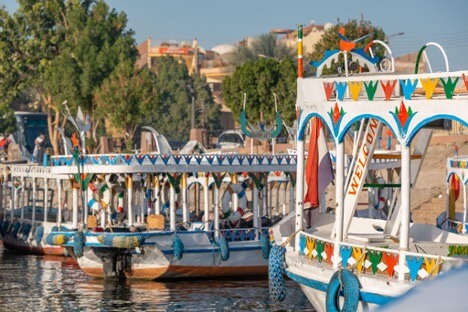
- Private felucca: Glide along the water in a traditional wooden sailboat. It’s a quiet, exclusive river experience past Elephantine Island that reminds you exactly why Egypt remains one of the top destinations in the Middle East for couples seeking calm over content.
- Elephantine Island: the Nilometer and archaeological remains, for deeper local context
- Botanical Garden: gentle walking and greenery, a lower-intensity option
- Responsible Nubian community visit: confirm it’s locally led, ask before photographing residents, and avoid anything that feels like compulsory shopping.
Final Night Onboard
Keep the last evening restrained: sunset from the deck, a farewell dinner, Nubian music or onboard entertainment where the ship offers it, and unhurried packing. If you’re continuing to Abu Simbel the next morning, an early night matters more than the entertainment does.
Day 5: Disembarkation and the Best Way to Extend the Route
The final day is straightforward: breakfast, cabin checkout, disembarkation, and a transfer to the airport, station, or a post-cruise hotel.
Do Not Assume Abu Simbel Is Included
Abu Simbel lies beyond the core Luxor to Aswan sailing corridor. It’s typically offered as an optional extension rather than a built-in stop, though some complete Egypt packages do bundle it; worth confirming directly rather than assuming either way.
How to Customize a Premium Luxor-to-Aswan Cruise
Once the itinerary logic makes sense, the remaining decisions are commercial: exact ship, cabin size and position, private veranda versus French balcony, private versus shared Egyptologist, excursion group size, included entrance tickets, upgraded tomb ticket supplements, transfers, balloon and Abu Simbel arrangements, substitution policy, and onboard spa or pool facilities.
Decide Where Premium Spending Makes the Biggest Difference
If budget is finite, spend in this order:
- A private or very small-group Egyptologist
- A well-positioned cabin with a confirmed window configuration
- A pre-cruise Luxor night
- Private transfers
- One additional highlight: a balloon flight, an upgraded tomb ticket, or both together if your transfers are carefully coordinated (expect an intensive start to the day if you combine them)
- A post-cruise Aswan extension
A bigger suite can’t compensate for rushed guiding or a poorly built itinerary; put the money into the experience first, the cabin second.
Note: Current first-party itineraries acknowledge that schedules can shift for reasons beyond the operator’s control, so build in some flexibility rather than expecting a printed schedule to hold exactly.
How to Tailor Your Route with a Local Specialist
To avoid the pitfalls of crowded itineraries and ensure a truly opulent experience, it is highly recommended to tailor your journey with Nile Cruise Holiday. As local specialists, they seamlessly handle the logistics, from comparing luxury vessels to securing private Egyptologists, allowing you to simply relax and soak in the grandeur of the Nile.
Final Verdict: Is Four Nights Enough?
Four nights is enough to experience the classic Nile cruise Luxor to Aswan core route properly. It is not enough for deep exploration of both Luxor and Aswan; that’s what the pre- and post-cruise nights are for.
The itinerary works best when travelers arrive in Luxor one night early, and a post-cruise Aswan night meaningfully improves both the Abu Simbel and Nubian options. The strongest upgrade isn’t a bigger cabin;n it’s better guiding and better pacing.
The four-night route succeeds when the ship handles the logistics and the traveler protects enough time to experience the river between the monuments.
