I moved to a small town in the Friuli Venezia Guilia region of Italy when I was 29. Back then, my knowledge of wine was relatively limited. Before Italy, my drinking experiences were basically whatever sickly sweet concoction was being served out of a tub – often literally a bathtub – at whatever frat party my friends and I ended up at during my years at UNLV in Las Vegas. My first experiences with wine were likely at holiday family dinners like Thanksgiving, and I certainly knew nothing about discerning the nuance of one grape varietal from another.
But all of that changed when I moved to Italy.
What started out as visiting vineyards for a tour and tasting as something to occupy a Saturday afternoon quickly turned in to a true passion. Once I opened myself to training my palette to determining the notes I actually enjoyed in wine, the wines started to floor me. Rich, jammy and full of berries, sometimes even notes of chocolate or tobacco depending on how long the wine was aged. It was definitely the reds that won my heart, and tastes.
Of course, as a self-educated wine lover that has since turned discovering unique wine tourism experiences into a career writing about them, Piedmont’s rolling hills covered in vines had long been on my list to visit.
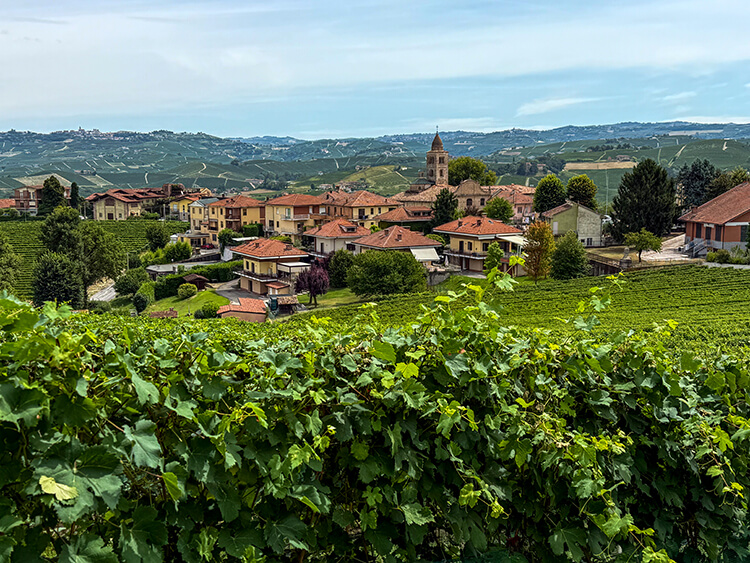
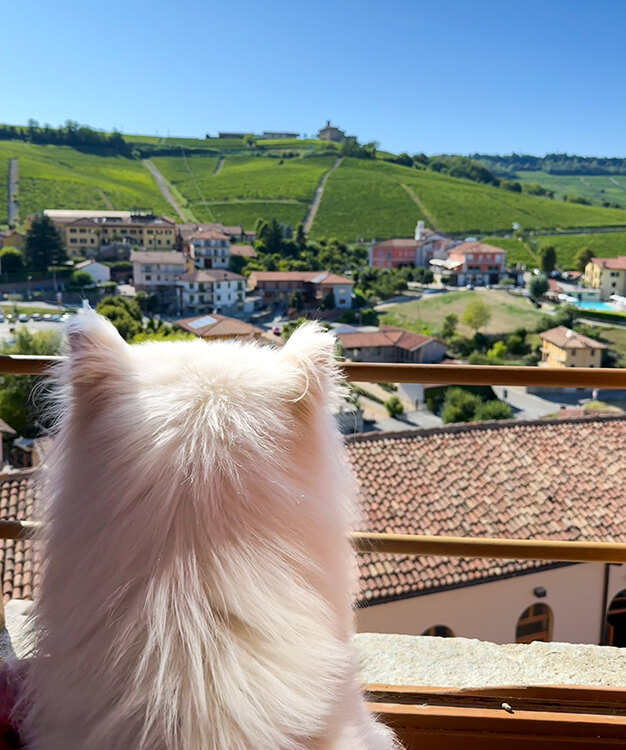
Acclaimed as the ‘King of Wines’ and ‘Wine of Kings’, Barolo is one of Italy’s greatest wines. And this prestigious wine region is not only recognized as a UNESCO World Heritage site, it is also very dog-friendly – making Barolo a perfect wine escape to discover with my globe trotting pup, Coco. And I was surprised to discover through multiple visits, it still feels like one of Italy’s best-kept secrets, even in the height of summer when much of the rest of Italy is overflowing with tourists.
Here’s how to plan a dog-friendly trip to Barolo from where to stay and dine on Piedmontese specialties to the dog-friendly Barolo and Barbaresco wineries where you can savor a truly sublime moment with your dog in tow and the must-sees of the area that even your dog will enjoy.
Barolo: Italy’s Greatest Wine
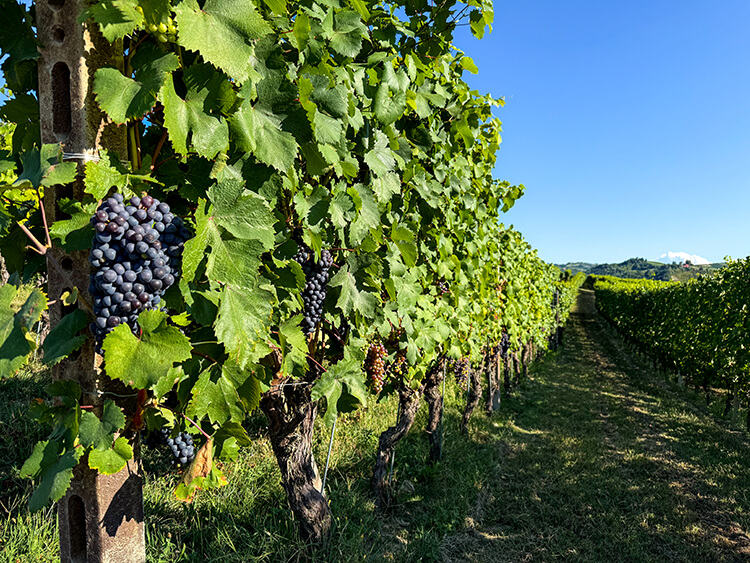
Named a UNESCO World Heritage site in 2014, the Barolo wine region sits in the Langhe hills just south of the famous truffle town of Alba. The area is known for breathtaking landscapes and centuries-old cultivation techniques. Nebbiolo is the main grape varietal, the prized red grape used to make Barolo and Barbaresco, respectively called the “king” and “queen” of Piedmontese wines.
Wine has been produced in this area of Italy for centuries. Vine pollen was found and dated back to the 5th century BC. Pliny the Elder even described Piedmont as one of ancient Italy’s favorable regions for vine-growing.
Barolo wine can only be produced in 11 specific communes. The most famous Barolo communes are Barolo, La Morra, Castiglione Falletto, Serralunga d’Alba, and Monforte d’Alba.
Barolo wine is always made from 100% Nebbiolo grapes and has strict aging regulations in order to be labeled a Barolo. Barolo must age for at least 38 months from 1 November of the harvest year, including at least 18 months in wood. Barolo Riserva requires at least 62 months of aging, including 18 months in wood.
Dog-Friendly Barolo Wineries
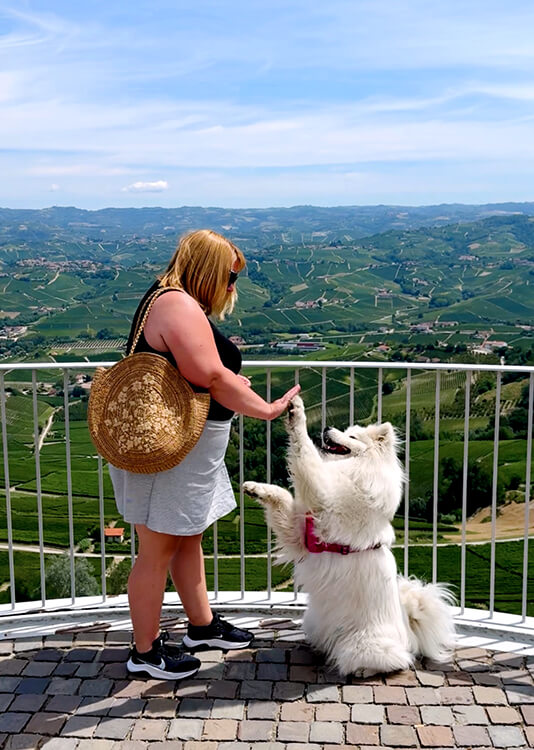
A dog-friendly wine getaway in Barolo isn’t complete without experiencing the deep-rooted winemaking heritage of the Langhe. And luckily, wine tasting with your dog is basically standard practice at many Barolo and Barbaresco wine estates these days. With Italy being one of the most dog-friendly countries in the world and winery owners understanding how pets are part of the family, numerous wineries in the region have adapted their visits and tasting rooms to welcome your dog right along with you.
Just be sure to note that you will be visiting with your four legged friend when booking your tour and tasting, even when a winery is noted as dog-friendly. The advance heads up just allows the winery to adapt for your visit.
Diego Morra
Diego Morra is a perfect winery to visit when you’re in the Barolo wine region. Third generation from a family of wine growers, Diego decided to take the next step to open his own winery. Now he and his wife, Francesca, welcome both dogs and their well-behaved humans for wine tasting experiences at their beautiful winery in the heart of the Barolo vineyards.
The winery has 30 hectares of vineyards in the renowned Monvigliero area of Barolo, which includes the grape varietals Barolo DOCG, Langhe Nebbiolo DOC, Verduno Pelaverga DOC and the native varieties such as Dolcetto and Barbera. In addition to their vineyards, they also maintain 20 hectares dedicated to hazelnut groves.
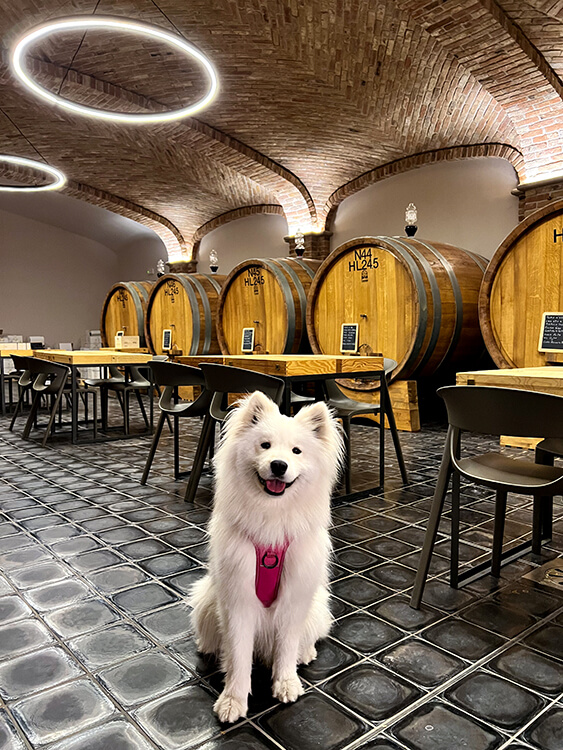
Embracing both both traditional and modern winemaking techniques, Diego Morra produces a remarkable selection of wines.
Several wine tasting experiences are available to choose from. I choose the Royal Flush experience, which includes tasting Diego Morra’s 5 most important red wines. The visit begins with a tour from their vineyards to the cellars to help you understand how the wine goes from grape to your glass.
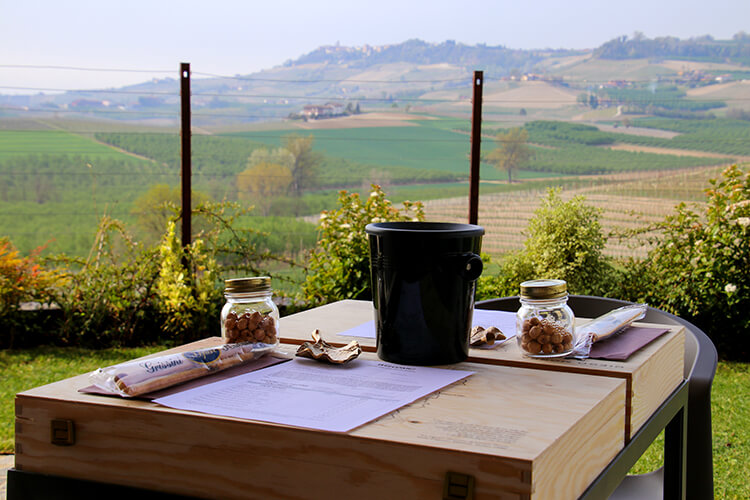
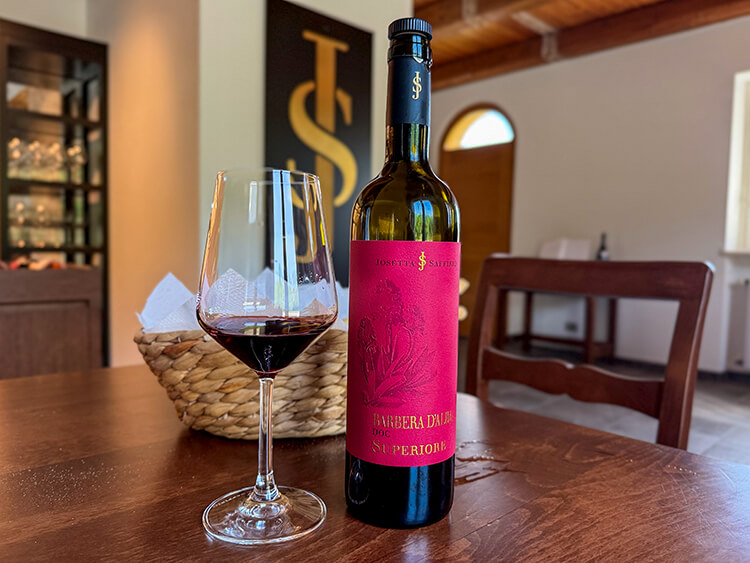
The tour ends with the tasting on Diego Morra’s stunning terrace with breathtaking views over their vineyards. You taste Verduno Pelaverga DOC, Barbera d’Alba DOC Superiore Le Schiene, Langhe DOC Nebbiolo Il Sarto, Barolo DOCG Zinzasco, and Barolo DOCG Monvigliero. The tasting is accompanied by breadsticks to cleanse the palette, hazelnuts from their grove, and a chocolate pairing.
Dogs can join you throughout the entire tour at Diego Morra’s exceptionally dog-welcoming winery.
Josetta Saffirio Winery
Visit the 5th generation family-run Josetta Saffirio Winery in Barolo’s Monforte d’Alba for a tour and dog-friendly wine tasting. The family has been making wine for over 200 years.
Josetta Saffirio Winery gained acclaim in thee 1980s when fourth generation Josetta took over at the young age of just 23. Up until that point, the estate had sold their grapes. But under Josetta’s leadership and experimentation with producing Barolo wine, the winery began to make a name for itself on the local wine scene.
It was just a few years later that Sara quickly followed in her mother’s footsteps and took over the winery at just 22 years of age. With her parents’ support, Sara became the fifth generation and perpetuated the female lead lineage. And what started out as a modest production in the 1980s is now an acclaimed winery producing 100,000 bottles per year in a strict organic method.
The tour starts just outside the winery where vines are planted practically on the tasting room’s doorstep. The winery extends over soils that represent the oldest geological zone in the Barolo area, embracing the subzones of Castelletto, Perno and Bussia in the
municipality of Monforte d’Alba, and Ravera in the municipality of Novello. The soils are some of the oldest in the Barolo communes, and are renowned for producing more complex wines since the vine roots have to grow deeper in search of water.
The marly limestone soils favor the development of Nebbiolo grapes, used to make Barolo wines of exceptional quality, rich in aromas and scents, with remarkable ageing potential.
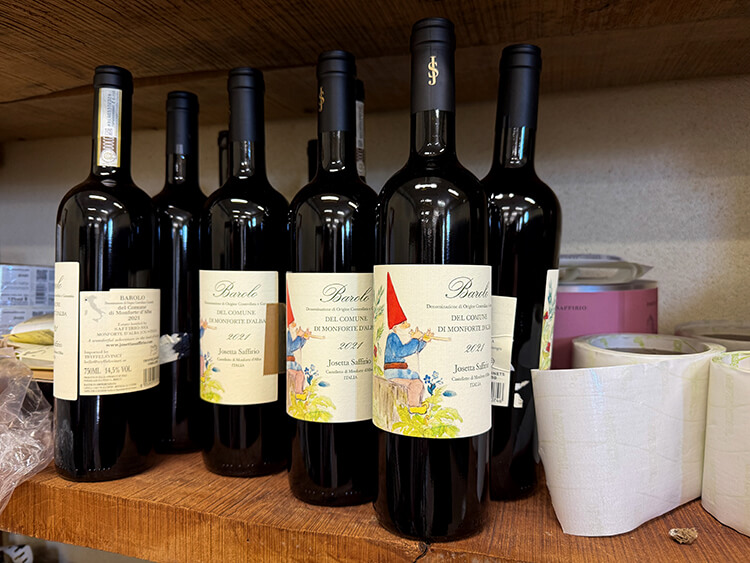
Continuing the tour to the family’s private cellar, you can see the evolution of the Josetta Saffirio Winery. The labels themselves tell the story, and I love that the original label had a gnome on it. The gnome label is still used for Josetta Saffirio bottles exported to Sweden. The significance of the gnome was a family tale told to the Saffirio kids, including Sara, of gnomes secretly making the wine in their winery.
The Barolo Experience tasting includes a tour through the cellar and tasting of Josetta Saffirio and Sara Vezza wines that embrace the history of the winery: Nebbiolo d’Alba Spumante Metodo Classico, white Langhe Rossese bianco, Barbera d’Alba, Langhe Nebbiolo and Barolo.
Note that dogs are welcome in the cantina only, and not in the cellar portion of the tour.
Roberto Sarotto Winery
The history of Roberto Sarotto Winery dates all the way back to 1820 when the family winery was founded by Giuseppe Sarotto. For three generations, the winery exclusively produced Dolcetto and traded it locally as well as exporting it to England. It was after WWII and phylloxera that fourth generation Angelo Sarotto introduced new grape varieties such as Moscato, Freisa and Barbera to the estate. But eventually the wine making activities came to a halt.
Roberto, fifth generation of the Sarotto family, graduated from wine school in Alba in the early 1980s. Roberto purchased a 20-hectare property in Barolo, which re-launched the Sarotto family’s wine making activities. With annexed vineyards in the most important crus in the municipality of Neive, Barbaresco was added to the Sarotto range of wines in the 1990s.
Roberto and his wife expanded even further to set up another winery in Gavi, and added the production of Barbera d’Asti to their range. Today Roberto Sarotto Winery is is one of the most renowned producers in Piedmont and is synonymous with the most prestigious qualities and varieties of DOC and DOCG wines.
You can take a Roberto Sarotto guided tour walking through the entire process from grape to bottle. The tour visits the winery where wine ferments in steel tanks, the barrel room aging area, bottling line, and the sparkling wine production area.
You also visit their impressive 478-hectoliter Grande Botte Ai Fondatori, which holds the Guinness World Records for the largest oak barrel in the world since 2022. The giant oak wine barrel isn’t just for looks; it does slowly age wine and a limited edition Barolo Riserva is aged in the barrel.
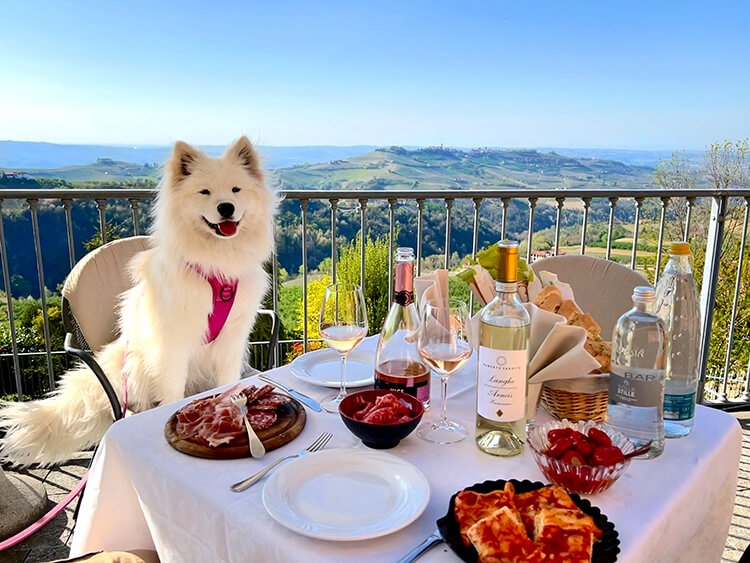
The tour finishes with a tasting of six wines paired with local cured meats and cheeses in the tasting room or on the panoramic terrace.
Dogs are welcome on the guided tour and throughout the property. The winery even has their own resident winery dogs named Raul, Toki, Oliver, and Pongo.
Other Dog-Friendly Things to Do in Barolo
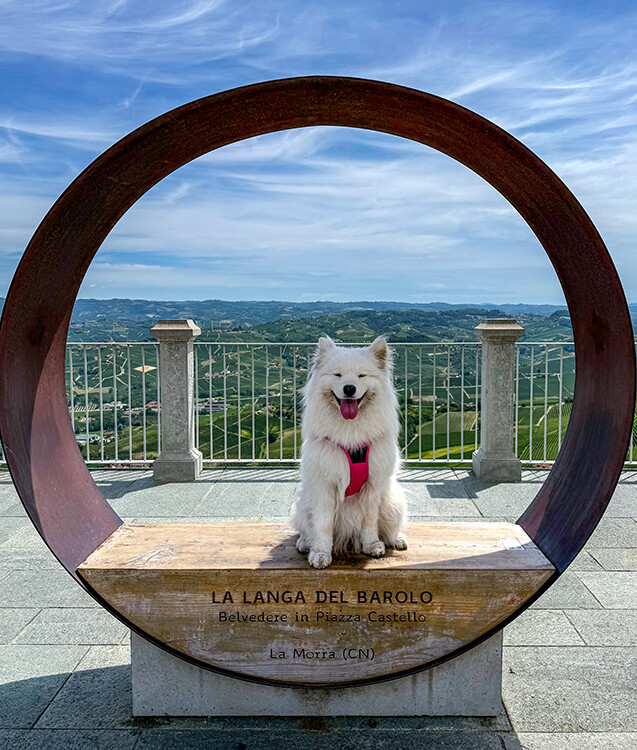
Get a Panoramic View of Barolo from La Morra
La Morra is one of the 11 villages that make up the Barolo communes, and also the highest point in the Barolo wine region. From the Belvedere on Piazza Castello at the top of the village, you have a spectacular panoramic view over all 11 villages.
For an even higher view, climb the 31 meter high Baroque-style bell tower on the piazza. It was constructed between 1709 and 1711, and can be visited free of charge.
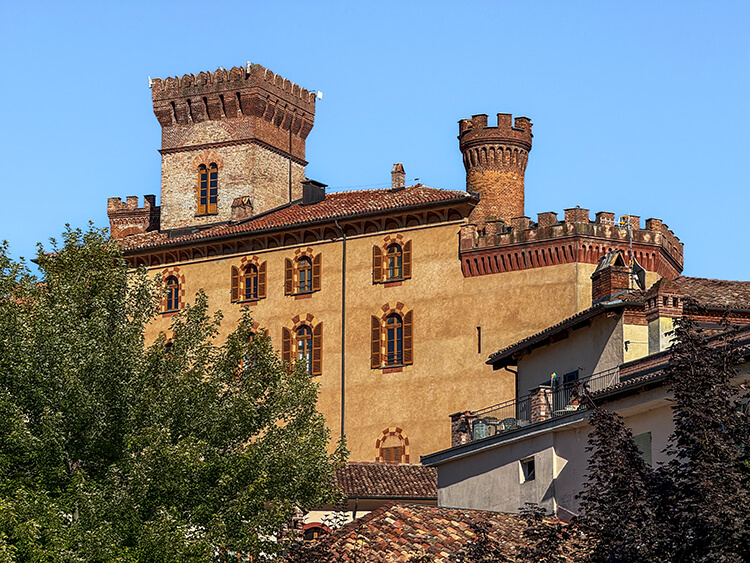
Visit the WiMu Museo del Vino a Barolo
The WiMu Wine Museum of Barolo is one of Italy’s most important museums dedicated to wine. Set in the 1000 year old castle that dominates the village of Barolo, the wine museum combines art installations and interactive displays on a journey through wine. And it is a dog-friendly museum, welcoming your dog to visit alongside you on a leash.
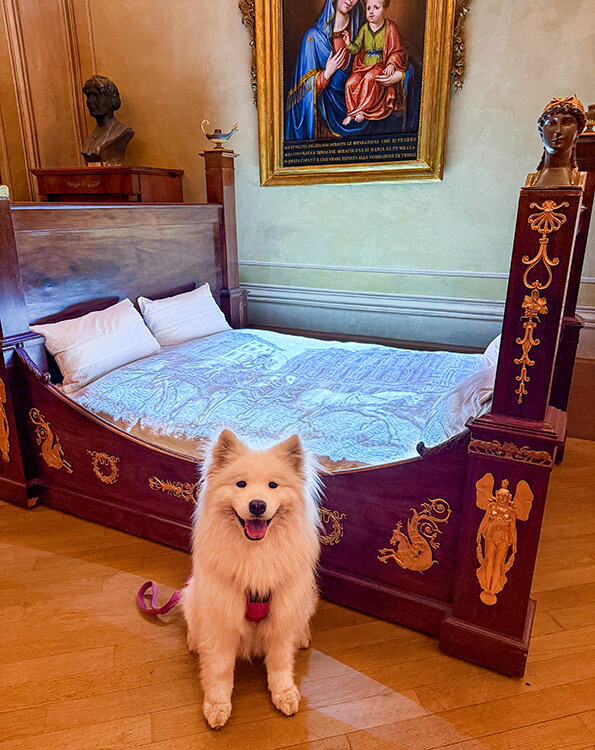
The museum is spread over five floors, each with a different theme and story. The visit starts on the top floor with the panoramic terrace overlooking the Barolo hills. The third floor then showcases the relationship between nature and the vineyard. The second floor is a walk through the history of wine and winemaking. And the first floor is a homage to the Falletti di Barolo family, former residents of the castle and the family credited with transforming Barolo wine into a noble and refined wine.
Also accessible independently from the WiMu, the visit ends in basement of the castle at the Enoteca Regionale del Barolo where you can taste a large selection of Barolo wines by the glass from the enomatic wine machine and buy wines.
I was quite impressed with the WiMU Wine Museum of Barolo, and it is on par with Bordeaux’s La Cité du Vin wine museum with its unique story telling through interactive exhibitions.
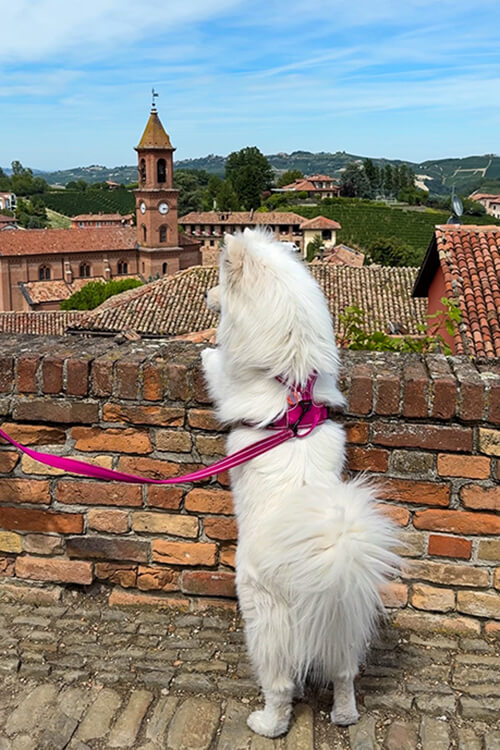
Take a Guided Tour of Castello di Serralunga
Considered to be one of the best conserved examples of 14th century noble castles in Piedmont, Castello di Serralunga is a must visit when in the Barolo wine region. It sits atop the village of Serralunga d’Alba, which is one of the most beautiful and historically intact villages of the Langhe.
Castello di Serralunga d’Alba towers over the charming village and overlooks the Barolo hills. Built between 1340 and 1357, the castle has remained largely unchanged since its construction. The only major change was that the third floor was originally an open air rooftop protected by blackbirds before it was enclosed with a roof. The fortification never served any military purpose, and instead served for the noble Falletti family to supervise the agricultural production of the nearly 50 properties they controlled in the area.
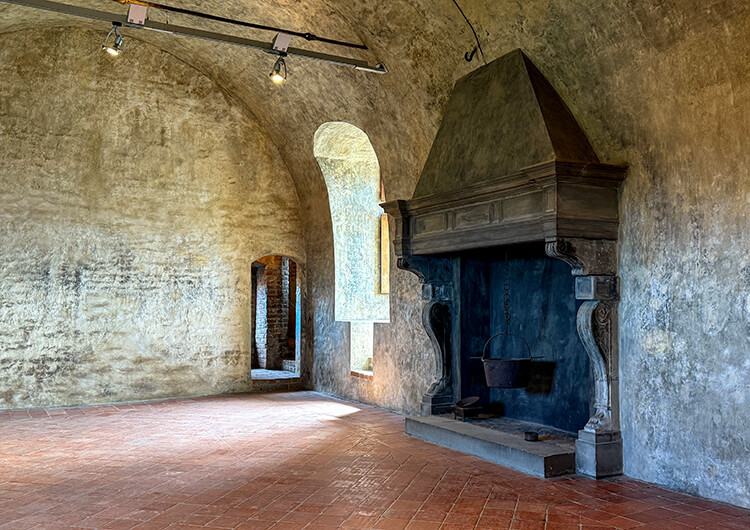
Today the castle is mostly empty on the interior, with only the large fireplaces, a toilet and the wooden ceilings remaining as testimonies of the original furnishings.
Castello di Serralunga d’Alba is dog-friendly and can be visited on a 45 minute guided tour. The highlight is the view from the tower terrace overlooking the UNESCO listed Barolo hills, and on a clear day, all the way to the snow-capped Alps.
Walk the Sentier du Barolo N° 7
Piedmont has many dog-friendly walking and hiking routes, and among the most beautiful is certainly the Sentier du Barolo N° 7. The relatively easy walking route winds for 11.5 kilometers around the most famous and historic Barolo vineyards. It’s a loop trail that starts and ends in La Morra, and is well marked with red and white sign markers for the trail. You can walk it in just a few hours, or make a day of it by stopping for wine tasting and lunch in one of the villages along the way.
La Fiera Internazionale del Tartufo Bianco d’Alba
La Fiera Internazionale del Tartufo Bianco d’Alba, or the Alba White Truffle Fair, has been held in Alba every year from mid-October through early December since before World War II. The fair features a large outdoor market where you can buy certified white truffles directly from the source.
There are also cooking classes and demonstrations using truffles, wine tastings, dinners by both Italian and international chefs in unusual locations, Medieval reenactments, historical parades, concerts and exhibitions. It’s truly a one-of-a-kind celebration of all things truffle.
Where to Eat in the Barolo Wine Region
Osteria More e Macine, La Morra
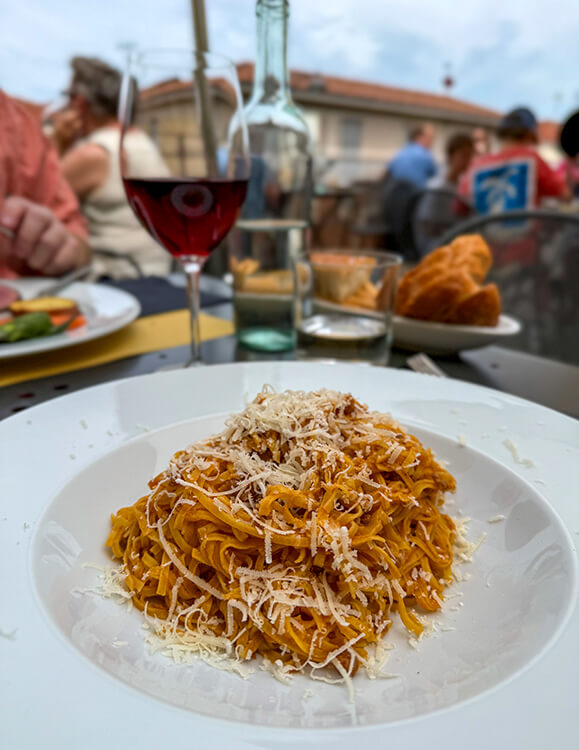
Situated in the historic center of La Morra, the highest point in the Barolo wine region, Osteria More e Macine is a simple restaurant loved by locals. The menu is a chalkboard menu, changing to showcase the best seasonal ingredients, and is full of regional favorites like tajarin, vitello tonnato, and lean Fassona beef. The wine list is impressive and well-curated reflecting the region’s strengths, with some rarer bottles available, and many by-the-glass options.
Trattoria Nelle Vigne, Diablo d’Alba
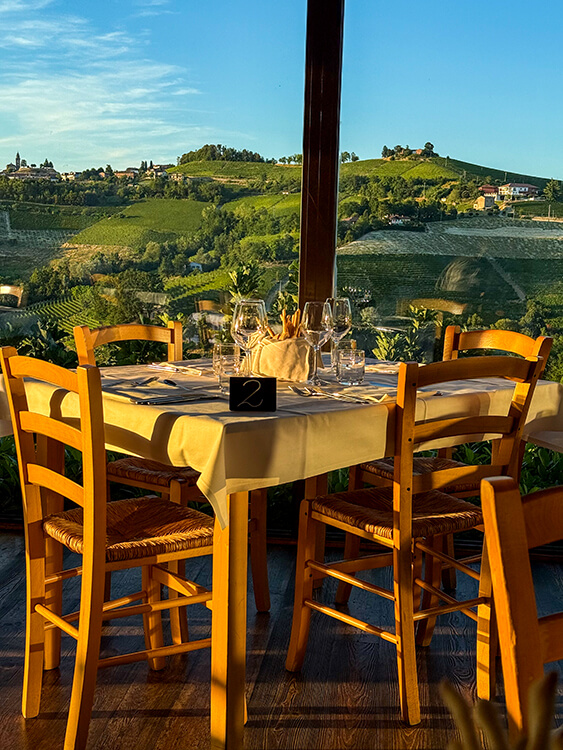
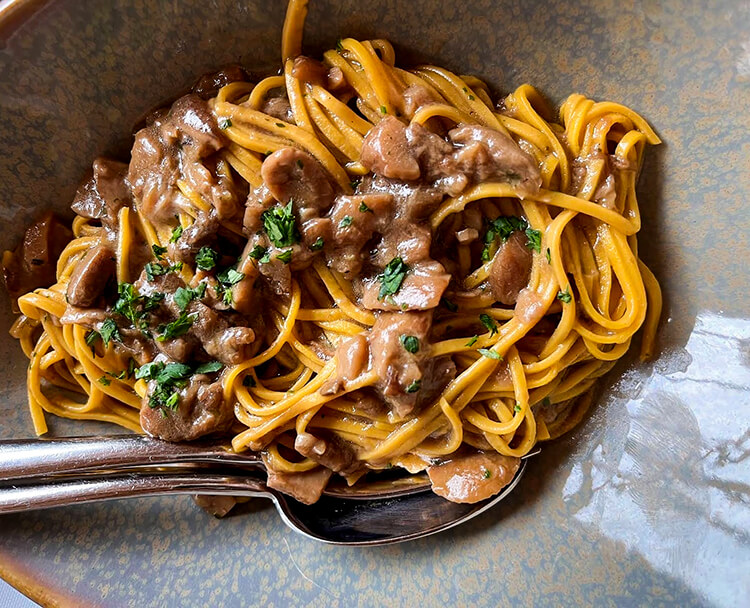
While Piedmont offers many Michelin-starred dining experiences throughout the region – 34 to be exact – you don’t necessarily want to eat at a Michelin-starred restaurant every night of your trip. For just a memorable experience that is far easier on the wallet, head to the stunning Trattoria Nelle Vigne. This restaurant is nestled among the vines in the heart of the Langhe. With an incredible view over the terraced Barolo vineyards, Trattoria Nelle Vigne serves a tasting menu that changes regularly to showcase the best local ingredients of the season. The tasting menu includes 5 starters, a first course, a second course with a side, and a dessert.
Piazza Duomo, Alba
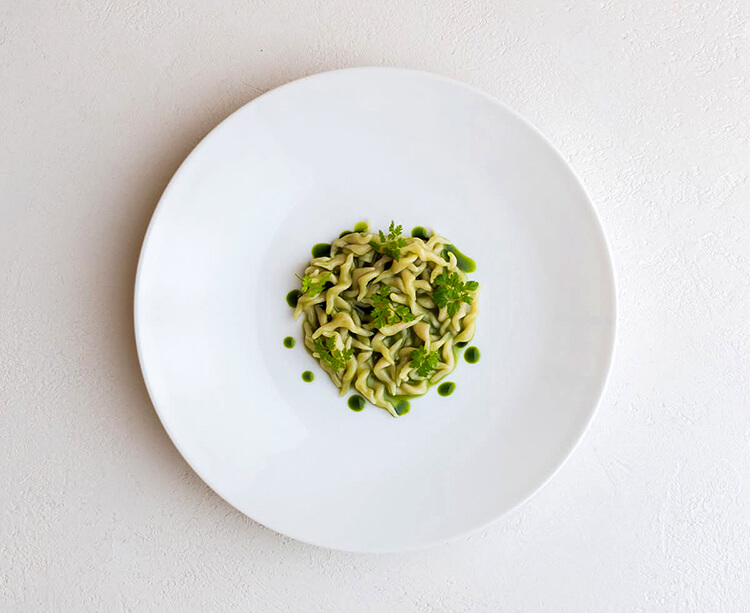
Alba, known as the home of the famous Alba white truffle, is a favorite Piedmont town among food and wine lovers. You can find one of the World’s 50 Best Restaurants in Alba, and Piazza Duomo is certainly a bucket list dining experience with 3 Michelin stars. The menu features Piedmontese cuisine and many of the ingredients are sourced right from the restaurant’s own garden.
Where to Stay in the Barolo Wine Region
B&B La Sismonda
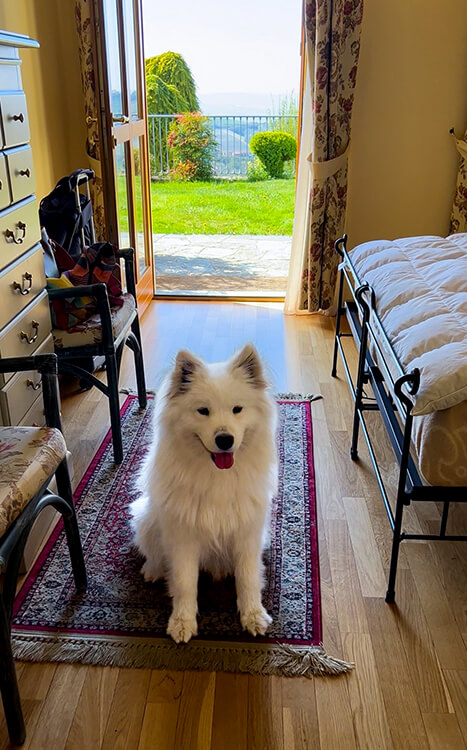
La Sismonda bed & breakfast is located high in the village of Rodello, just a short drive from Alba and convenient to discovering the Barolo and Barbaresco vineyards of the Langhe. The house has a stunning panoramic terrace overlooking the Langhe hills, and offers wine tastings of the Roberto Sarotto Winery (you can also visit the winery for a dog-friendly tour and tasting). Owner Luca is incredibly welcoming and friendly.
The six rooms are spread across two floors of the house, and are spacious and furnished in a style of Italian refinery. The lower level rooms have direct access to the garden. Each room has a small refrigerator, hair dryer, satellite tv, and wifi. Note that the bed & breakfast does not have air conditioning, so do keep that in mind if traveling with a dog in the hot summer months. Though I have stayed with Coco in August during a heat wave, and the room temperate remained comfortable.
Breakfast is an ample buffet of local Cuneo specialties, cheeses, meats, salads, and pastries and served on the beautiful terrace.
La Sismonda welcomes dogs with no size or weight restriction and no additional pet fee charges. Dogs are welcome everywhere throughout the bed & breakfast, including the garden and terrace during breakfast.
Casa di Langa
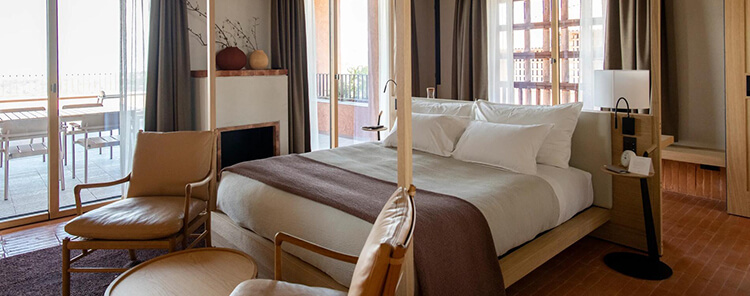
Casa di Langa is a 39-room boutique luxury resort set among the rolling hills of Alta Langa focused on sustainability. The surrounding 42 hectares of vineyards and natural landscape provide the perfect place for a walk when traveling with your dog in the Langhe. And with a heated outdoor pool, spa, onsite restaurant and a variety of experiences offered through the hotel, there is hardly a better luxury experience in the Barolo wine region.
The hotel offers a variety of experiences from cooking classes to wine tastings, and boasts the world’s first ever truffle concierge who can help arrange truffle hunting excursions, and clean, storage, package and ship your prized truffle finds. Casa di Langa also offers some unique amenities such as classic car rentals, photo sessions with a photographer, and can arrange hot air balloon flights over the Barolo hills.
The rooms and suites focus on simple luxury with soft colors, and every room has a private terrace to relax and enjoy a glass of wine straight from the neighboring vineyards. Every room also features a king size bed that envelopes you like a cloud, a reading nook, and rain showers in the bathroom for self care.
The Casa di Langa pet policy welcomes dogs with no size or weight limit for a pet fee of 50€ per night. The hotel provides kennels, bowls and doggy clean up bags. Dogs on a leash are welcome in most common spaces throughout the hotel, including the restaurant (only small dogs up to 10kg upon request), but are not allowed at the spa, gym or pool.
Getting around the Barolo Wine Region
While you can get to Alba by train and some buses run throughout the wine region, renting a car is highly recommended to fully explore Piedmont’s countryside and wine regions.

This is a UNESCO World Heritage Site. For more info click here.
You can see all the UNESCO World Heritage Sites I’ve visited here.
This article contains affiliate links. When you book through our affiliate partner sites, we earn a small commission at no additional cost to you.
