The first time we drove into the Icelandic Highlands, we lost cell service inside of an hour, saw exactly two other vehicles all day, and pulled over to watch a herd of Icelandic horses gallop across a lava plain against a backdrop of Snæfell glacier. That was the moment we understood why so many travelers who have already done the Ring Road spend the rest of their lives trying to get back to Iceland. This Iceland Highlands itinerary is what we’ve built after three trips into the interior, and it’s the route we’d recommend to anyone who wants to see the country most tourists never reach.
The Ring Road, for all its beauty, is Iceland’s tourist infrastructure. It’s paved, it’s manageable in a rental sedan, and every waterfall on it has a gravel parking lot and a coach tour. The Highlands are the opposite of all of that. This is the country’s untouched interior – a network of rhyolite mountains, black sand deserts, glacial rivers, and geothermal valleys accessible only by unpaved F-roads, only in a proper 4×4 vehicle, and only during the short window from mid-June to early September when the routes are open and the river crossings are passable.
What follows is a full 9-day Iceland Highlands itinerary that covers the three legendary Highland tracks – Fjallabak, Sprengisandur, and Kjölur – along with detours into Landmannalaugar, Askja, and the Kerlingarfjöll mountains. It also includes the practical planning we wish someone had handed us before our first attempt: F-road specifics, vehicle choice, cost breakdowns, and shorter alternatives if you don’t have nine full days.
When to Visit the Icelandic Highlands
The Highlands operate on a completely different calendar from the rest of Iceland. Where the Ring Road is drivable year-round, most Highland F-roads only open between mid-June and early September, and even that window shifts each year based on snowmelt, river levels, and road conditions. The Icelandic Road Administration (Vegagerðin) updates F-road status daily at road.is – you’ll be checking this website obsessively during your trip.
Late June to early July is when the last F-roads finally open, and it’s also when Highland waterfalls are at their most powerful from the snowmelt. The trade-off is that river crossings are at their highest and most dangerous during this stretch. Mid-July through mid-August is the peak sweet spot: all F-roads are open, rivers have dropped to manageable levels, and daylight stretches close to 20 hours per day. Late August into early September brings the first hints of autumn color and slightly quieter conditions, but weather becomes less reliable and some F-roads start closing again by early September.
For a nine-day itinerary that includes all three Highland tracks (F208 Fjallabak, F26 Sprengisandur, and F35 Kjölur), aim for mid-July through mid-August. This is when we did our most successful trip, and it’s the window we’d recommend without hesitation.
Choosing Your Vehicle for the Highlands
This is the single most important decision you’ll make for a Highland trip, and it’s the one most first-timers get wrong. Icelandic law requires a 4×4 vehicle on all F-roads – the roads marked with the letter F on maps. Driving a 2WD vehicle on an F-road voids your rental insurance the moment you turn onto it, and the fine from Icelandic authorities is significant if you’re caught. Beyond the legal issue, F-roads have gravel, ruts, steep grades, and river crossings that will destroy a low-clearance vehicle.
Beyond the 4×4 requirement, the real choice comes down to setup. A standard 4×4 SUV works, but it means booking hotels in remote regions where accommodation is scarce and expensive – a hotel room in the Highland gateway towns during peak season runs $250 to $400 per night, and inventory sells out months in advance. And once you’re deep in the Highlands, there simply are no hotels. You’d be driving hours back to civilization every night just to sleep in a bed.
For a trip like this, we’d recommend you rent a 4×4 camper rather than a standard 4×4 car – combining accommodation and transport in one vehicle is a game-changer when you’re spending nights in remote Highland campsites where the nearest hotel is 100 kilometers away. We went with Campervan Iceland, a local Icelandic operator that’s been arranging Highland-ready 4×4 campers since 2013. Pickup is at Keflavík International Airport, which saves you the trip into Reykjavík after a long flight. Their 4×4 fleet includes rooftop-tent setups specifically designed for F-road travel, with the ground clearance and mechanical resilience these roads require. Bookings include unlimited mileage and base insurance, and critically, they offer gravel and sand-and-ash protection as add-ons – both of which are essentially mandatory for anyone actually driving into the Highlands. Customer service is available in English and Spanish, which matters more than it should when you’re troubleshooting a river crossing question at 10pm the night before departure.
Book your 4×4 camper four to six months ahead for peak Highland season. The inventory of Highland-ready vehicles is limited across all Icelandic operators, and the best-equipped rigs sell out first.
The 9-Day Iceland Highlands Itinerary
This route covers all three Highland tracks in one comprehensive loop, starting and ending in Reykjavík. Distances vary significantly depending on detours and river conditions, but you can expect to drive roughly 1,800 to 2,200 kilometers over the nine days. Fuel range planning is critical – more on that below.
Day 1: Arrival and Reykjavík
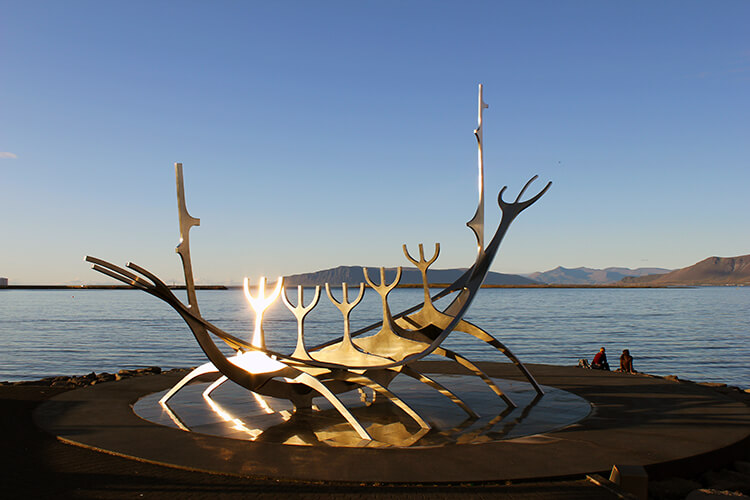
Fly into Keflavík International Airport, collect your 4×4 camper, and drive the 45 minutes into Reykjavík. Spend the afternoon walking the old town, stocking groceries at Bónus or Krónan (which are dramatically cheaper than any store you’ll encounter in the Highlands), and picking up any last-minute gear you need. Overnight at Reykjavík Campsite or one of the small camps in the greater capital area. If jet lag allows, use the long evening light to walk out to the Sun Voyager sculpture on the harbor.
Day 2: Reykjavík to Vík via the South Coast
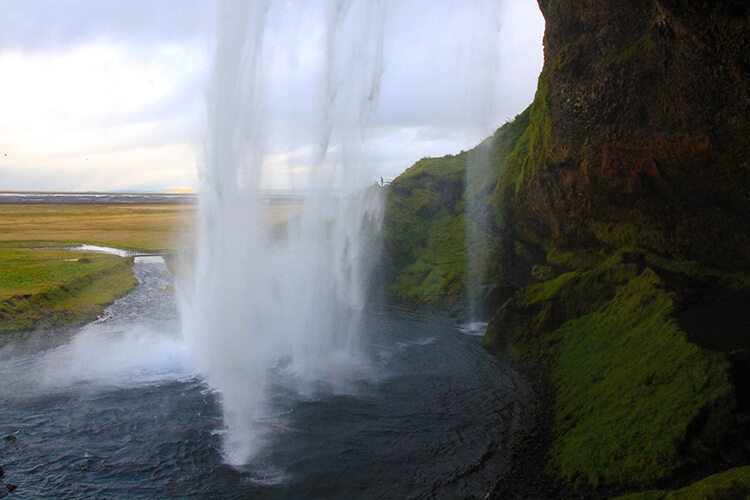
Head east on Route 1, hitting the classic south coast waterfalls in sequence – Seljalandsfoss (the one you can walk behind), Skógafoss (the massive curtain), and Reynisfjara black sand beach with its basalt columns. Stay well back from the water at Reynisfjara – the sneaker waves are legitimately dangerous, and they kill visitors every year. Overnight at the Vík campsite. Total drive: approximately 190 kilometers of paved Ring Road, so treat this as a warm-up day before the F-roads begin.
Day 3: Fjallabak Nyrðri (F208) to Landmannalaugar
This is where the Highlands begin. Backtrack west from Vík and turn north onto F208 – the Fjallabak Nyrðri route – heading up into the interior toward Landmannalaugar. The road climbs through lava fields into a landscape of ochre and green rhyolite mountains that looks like nothing else on Earth. Stop at Eldgjá canyon (a 40-kilometer volcanic rift) and the Lótipollur crater lake, a deep red-rimmed pool that’s arguably the most photogenic single stop in the Highlands. Reach Landmannalaugar campsite by late afternoon. There’s a small natural hot spring at the campsite – you’ll want to soak in it after this drive.
Day 4: Landmannalaugar Hiking Day
Landmannalaugar is the trailhead for the Laugavegur – Iceland’s most famous hiking route – and while you won’t do the full 4-day trek from here, you can do incredible day hikes into the same terrain. The Bláhnúk (Blue Peak) loop takes roughly 2 to 3 hours and delivers the classic technicolor Landmannalaugar views. The Brennisteinsalda circuit adds another 2 hours and passes steaming sulfur vents. Return to the hot spring in the afternoon to recover before the biggest driving day of the trip. Second night at Landmannalaugar campsite.
Day 5: Sprengisandur Route (F26) – The Great Crossing
Sprengisandur is the classic Highland traverse: 200 kilometers across a black volcanic desert between two glaciers, Hofsjökull and Vatnajökull. There are no gas stations, no lodges, no cell coverage for long stretches, and only a handful of other vehicles you’ll see all day. Fill your fuel tank completely before starting – the closest station is at Nýidælabotnar on the north end, and running out of fuel here isn’t just inconvenient, it’s genuinely dangerous. The scenery is austere and lunar, and honestly one of the most surreal drives you can do anywhere in the world. Aim to reach the northern end by evening. Overnight at Nyidælabotnar or continue to a campsite closer to the Mývatn region if energy permits. Expect 6 to 8 hours of driving at slow Highland speeds.
Day 6: Askja and Herðubreið (F88)
Askja is a massive volcanic caldera in the northeastern Highlands, and reaching it requires the F88 – arguably the most demanding F-road on this entire itinerary, with a mandatory river crossing at Öxará that can be intimidating even for experienced Highland drivers. Check road.is and speak to rangers before attempting. The reward is a walk down into a caldera with the deep blue Viti crater lake at its center, plus views of Herðubreið – the flat-topped mountain Icelanders call the Queen of Mountains. Return to camp near Vatnajökull’s northern edge for the night. If the F88 is closed or the river is too high, use this day for the Krafla geothermal area near Mývatn instead – also spectacular, without the risk.
Day 7: Kjölur Route (F35), Hveravellir, and Kerlingarfjöll
From the north, turn south onto Kjölur (F35) – the third of the great Highland tracks, running between the Langjökull and Hofsjökull glaciers. Kjölur is the most accessible of the three main routes (no river crossings on the main F35 itself), which means you can enjoy the scenery without the technical anxiety of Sprengisandur or Askja. Stop at Hveravellir, a geothermal area with hot springs where you can bathe outdoors between glaciers. Detour briefly onto F347 to Kerlingarfjöll, a range of rhyolite mountains streaked with hot spring colors that’s often called the miniature Landmannalaugar. Overnight at Kerlingarfjöll’s on-site campsite or continue south to camp closer to the Gullfoss area for tomorrow.
Day 8: Þingvellir National Park and Reykjanes Peninsula
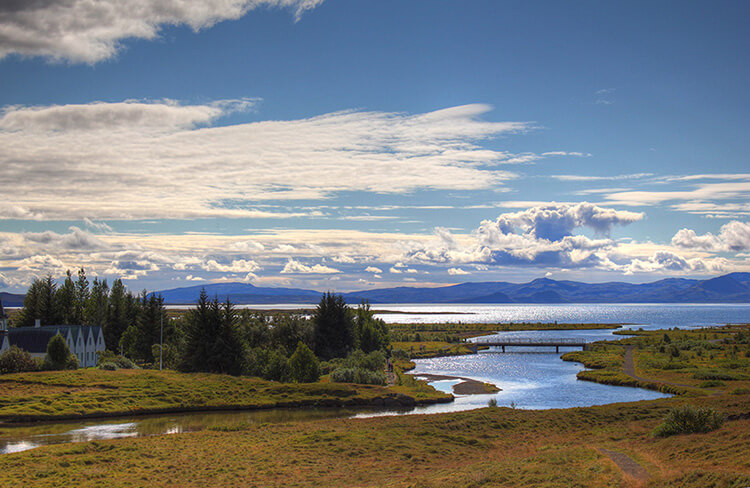
Emerge from the Highlands and drop back into paved Iceland. Visit Þingvellir National Park – the only place in the world where you can walk between the North American and Eurasian tectonic plates above sea level – then head southwest across the Reykjanes Peninsula to see the recent volcanic activity around Geldingadalir and Fagradalsfjall. If you’ve timed it right and an eruption is active, this is your chance. Overnight at a campsite near Reykjavík to prep for the flight home. If you have any budget left, book a slot at Blue Lagoon or Sky Lagoon for the evening – after nine days of Highland dirt, few things feel better.
Day 9: Departure
Drive back to Keflavík International Airport to return the 4×4 camper. Give yourself at least three hours before the flight for vehicle inspection, cleanup, and any last airport logistics. Iceland has a way of making you plan your return before you’ve even landed – don’t fight it.
Highlands F-Roads Explained: What You Need to Know
The letter F on a road number signals “fjallvegur” – mountain road – and it’s Iceland’s way of telling you that this route is unpaved, seasonal, and requires a 4×4 by law. F-roads are not maintained to normal road standards. They’re rutted gravel and volcanic sand, they cross rivers without bridges, they climb grades that will test both your vehicle and your nerves, and they close at the first sign of weather.
Insurance is the practical issue most travelers underestimate. Standard rental insurance in Iceland explicitly excludes damage sustained on F-roads for 2WD vehicles – the moment you turn onto one with a non-4×4 rental, you’re personally liable for any damage. Even with a 4×4, most rentals require add-on protection for gravel damage (which is nearly inevitable from other vehicles kicking up stones) and sand-and-ash protection (which covers volcanic sand storms that can strip paint in an afternoon).
River crossings deserve their own conversation. Icelandic river crossings kill visitors every year, mostly because people underestimate the depth and current. The rule: walk the crossing on foot before you drive it. If you can’t see the bottom, don’t cross. If the water is above your knees, don’t cross. If the current is strong enough that you can feel it push you, don’t cross. Wait for another vehicle to come through, watch how they do it, and follow their line. Never cross alone if you can avoid it. And critically: check that your rental insurance covers water damage – many policies specifically exclude it, and drowning a rental engine in a river crossing is a $30,000 to $50,000 mistake.
Safety and Preparation for the Highlands
Before you drive into the Highlands, file a travel plan with SafeTravel.is – Iceland’s national travel safety service. You submit your route, expected timing, and vehicle details, and if you don’t check in when expected, they’ll alert search and rescue teams. This is free, it takes ten minutes, and it’s saved more than a few travelers’ lives.
Weather in the Highlands changes hourly and dramatically. What starts as a sunny 55°F morning can turn into sideways rain, hail, or snow within an hour – even in July. Pack full waterproof shell and rain pants, wool or synthetic base layers, warm hat and gloves, and sturdy hiking boots. Cotton is worthless once wet. A down puffy is worth its weight for the cold evenings.
Fuel range planning is life-or-death here. Sprengisandur alone is 200 kilometers with no fuel stations. Assume 12 to 15 kilometers per liter on rough Highland roads (worse than paved driving), calculate your buffer generously, and always leave any fuel station with a full tank. Carry an emergency jerry can if your rental allows.
Download offline maps before you enter the Highlands. Cell coverage is patchy at best and non-existent for large stretches. Google Maps offline works, but the more reliable option is Maps.me or the Ja.is app which is Iceland-specific and includes campsite locations, gas stations, and road conditions.
Emergency number: 112. This is the pan-European emergency line and it works throughout Iceland, including via satellite in some Highland areas. If you have any doubt about your safety, call it. Search and rescue in Iceland is fast, free, and doesn’t judge you for using it.
Cost Breakdown for a DIY 9-Day Highlands Trip
A DIY Iceland Highlands itinerary is not cheap, but it’s dramatically less expensive than any guided tour equivalent. Here’s roughly what to budget for two people over nine days.
4×4 camper rental (9 days): $2,400-$3,600 for a Highland-capable rig from Campervan Iceland, depending on size and season. Includes unlimited mileage, base insurance, and typically comes with a heater, cooking setup, and bedding.
Fuel: $400-$600 depending on the specific vehicle. Fuel in Iceland runs around $2.00-$2.20 per liter, and a Highland-heavy itinerary of 2,000 kilometers at Highland fuel economy means significantly more than a Ring Road trip.
Campsites: $135-$225 total for both travelers across nine nights. Iceland’s registered campsites charge $15-$25 per person per night, most with hot showers and cooking shelters. The Tjalda app maps them all.
Food: $300-$500 if you cook from supermarkets. Stock groceries at Bónus or Krónan in Reykjavík before leaving the capital – prices in Highland gateway towns are noticeably higher, and there are no supermarkets in the Highlands proper.
Insurance add-ons: $180-$400 for gravel and sand-and-ash protection combined. Non-negotiable for Highland travel – don’t skip these.
Extras (Blue Lagoon, glacier tours, ice caves, whale watching): $300-$600 depending on which experiences you add. Book these in advance.
Total for two people: approximately $3,700-$5,900 for the nine days, excluding international flights. Half of what an equivalent guided Highland tour would run per person.
Shorter Iceland Highlands Itinerary Alternatives
If nine days feels ambitious, there are two shorter versions of this itinerary worth considering.
5-Day Fjallabak-Only Route. If your goal is Landmannalaugar and Fjallabak specifically, you can do a compressed version: Day 1 arrival and Reykjavík, Day 2 south coast to Vík, Day 3 F208 to Landmannalaugar, Day 4 hiking day at Landmannalaugar, Day 5 return via Þingvellir and departure. This gives you the most iconic Highland scenery without the ambitious Sprengisandur or Askja crossings. Ideal for first-time Highland travelers or shorter trip windows.
7-Day Southern Highland Loop. A middle option that skips Sprengisandur but includes Landmannalaugar, Kjölur, and Kerlingarfjöll. Days 1-2 are the same as the full itinerary. Day 3 covers F208 to Landmannalaugar, Day 4 is Landmannalaugar hiking, Day 5 exits Landmannalaugar via F208 south and enters Kjölur via F26 near Gullfoss to reach Hveravellir. Day 6 continues Kjölur and Kerlingarfjöll, and Day 7 is Þingvellir plus departure. Skips the most technical driving while still delivering both major Highland experiences.
Nine Days Later
Nine days in the Icelandic Highlands rewires your sense of scale. You come out of the interior with sand still in your boots, a rental camper that’s earned every one of its dents, and a very specific memory of what silence sounds like at 4am on a black volcanic plain with a glacier on the horizon. It’s the kind of trip that spoils you for other travel – which is why so many people we know who’ve done it are already planning their next one.
This is not a comfortable itinerary in the way a Ring Road trip is comfortable. But if you plan it properly – mid-July through mid-August, a Campervan Iceland 4×4 with the right insurance add-ons, a filed SafeTravel.is plan, and a healthy respect for what F-roads can throw at you – it’s the most rewarding way to see Iceland. The Highlands are what the rest of the world used to look like before anyone got there. Nine days in, you understand why some travelers spend their lives trying to hold onto that.
