The Loire Valley is one of France’s most idyllic regions with more than 300 palatial castles, Renaissance gardens, vineyards, ancient forests, and postcard perfect villages.
As the number one thing to do in the Loire Valley is visit the historic castles and marvel at their grandeur, most visitors assume that you cannot visit the Loire Valley with a dog. But that is simply not true. A number of Loire Valley castles are dog-friendly, with several welcoming dogs not only in the Renaissance-style gardens but also inviting well-behaved pups to tour the lavishly decorated interiors right alongside their humans.
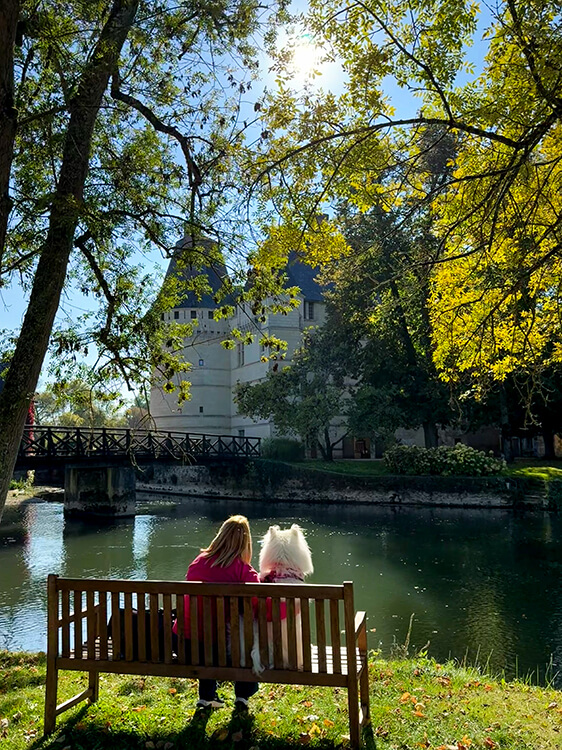
In addition to the Loire Valley castles and gardens themselves, there are a number of other dog-friendly activities and attractions to add to your dog-friendly Loire Valley itinerary. From dog-friendly wine tasting to a dog-friendly canoe trip to Château de Chenonceau, arguably one of the most beautiful Loire Valley châteaux, a trip to the Loire Valley with your furry best friend will undoubtedly be a memorable one.
Read on to discover all the best dog-friendly activities and attractions the Loire Valley has to offer, and where to find the best dog-friendly places to eat and stay.
The Best Dog-Friendly Loire Valley Châteaux to Visit
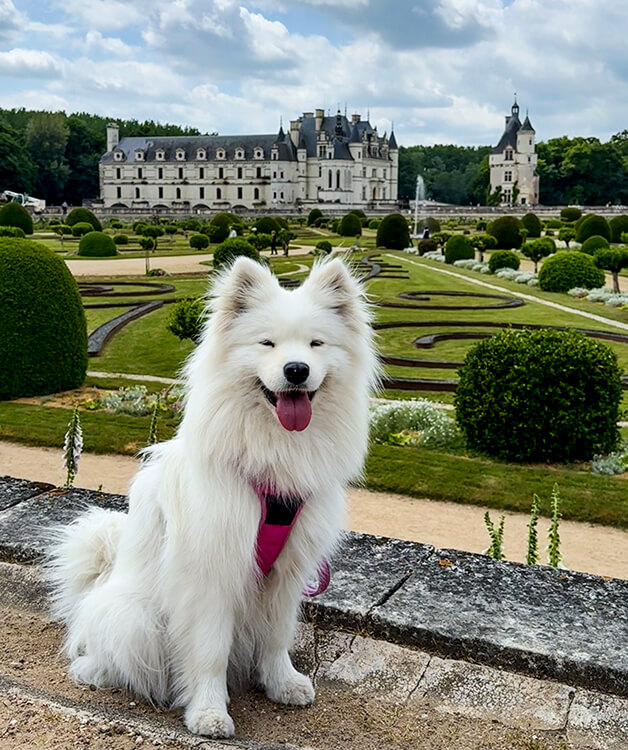
Château de Chenonceau
Château de Chenonceau is one of the most unique castles of the Loire Valley, making it also one of the most visited. It dates back to the 16th century and is known as the Ladies’ Château (Château des Dames in French) because the castle was built to the plans of Katherine Briçonneet and then was famously owned by King Henry II’s mistress, Diane de Poitiers, and then Henry II’s widow, Catherine de Medici.
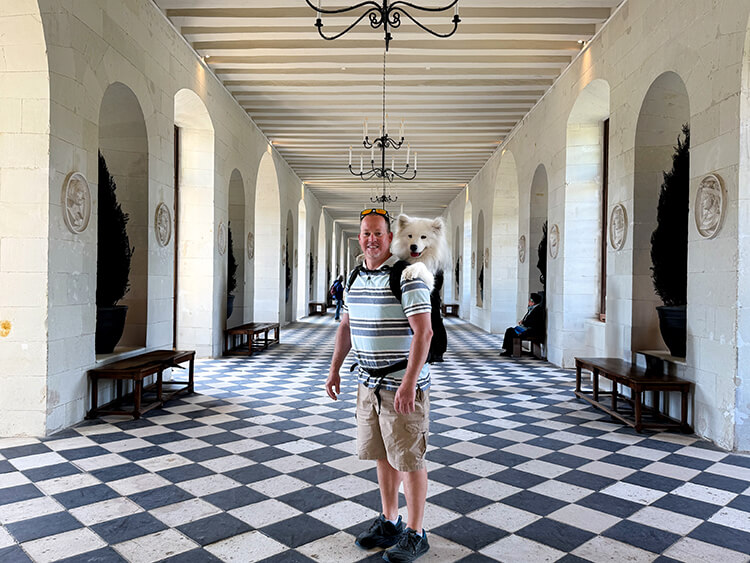
Don’t miss visiting the interior of Château de Chenonceau. The castle’s iconic gallery stretching gracefully over the River Cher is one of the most unique features of any Loire Valley castle. Realized by Catherine de Medici, the gallery has an air of Florence’s Ponte Vecchio.
The gardens and magnificent parkland are a peaceful place for a stroll. The layout of Diane’s Garden has remained unchanged since its creation by Diane de Poitiers. The more intimate Catherine’s Garden offers some of the most spectacular views of the château. And don’t miss finding your way through Catherine de Medici’s Italian maze, where at the center a raised gloriette provides a panoramic view of the maze.
Château de Chenonceau is entirely dog-friendly. Dogs on a leash are welcome throughout the various gardens and parkland, in the labyrinth, for wine tasting in the Caves des Dônes to try Touraine-Chenonceaux wines, and even to tour the castle rooms.
Note that to tour the castle interior, dogs must be carried or in a bag. Even larger dogs like Coco can visit in a backpack like Coco did in her K9 Sport Sac. There is no additional ticket or fee for visiting with a dog, but do note that some dates in busy summer months require Château de Chanonceau admission tickets to be purchased in advance.
Getting to Château de Chenonceau
Château de Chenonceau is of the Loire Valley castles easily visited by train and is exceptionally easy to visit by public transportation as it has its’ own train station named Chenonceaux. It is just a 5 minute walk from Chenonceaux station to the castle entrance. Search routes and book train tickets to Chenonceaux on Trainline.
If arriving by car at Château de Chenonceau, parking is free in the large onsite car park.
Château d’Ussé
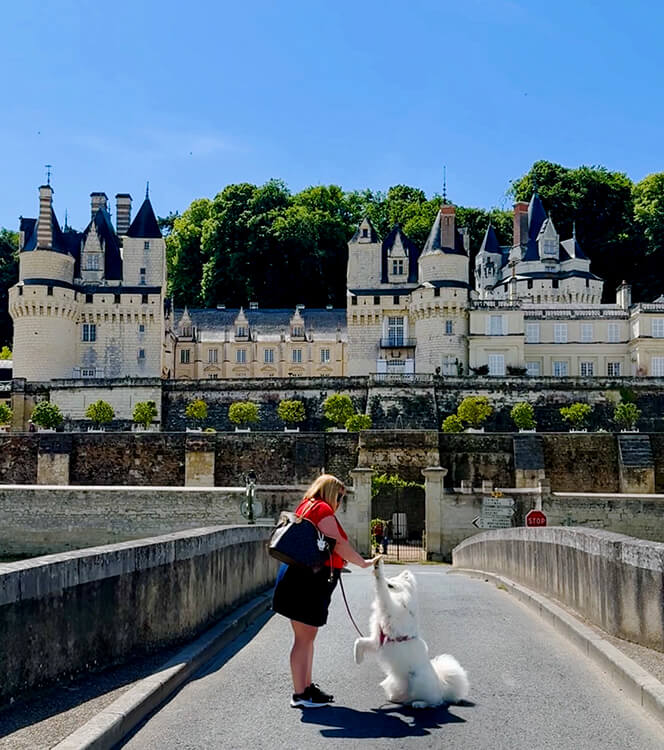
Perched above the Indre River in the Loire Valley, Château d’Ussé is truly like stepping in to a fairytale. With its’ pointed towers and white stone walls, it’s no wonder the enchanting castle inspired Charles Perrault’s Sleeping Beauty.
A fortress has stood on this strategic spot overlooking the roads between Chinon and Tours since around the year 1000, making Château d’Ussé one of the oldest Loire Valley castles. Château d’Ussé was not built during the Renaissance like many Loire Valley châteaux. Instead, its’ construction spans nearly 1000 years. The original defensive functions such as the dry moats and keeps eventually became merely ornamental. The Italian Renaissance can be felt in the elaborate sculptures, decorations and mouldings as you tour inside the castle.
A highlight is the climb up the Sleeping Beauty Tower, which is the oldest part of the château, and where the fairytale comes to life with storybook scenes set in the rooms and along the rampart walk. The sweeping views of the valley alone make the climb up the tower’s spiral staircase worth it.
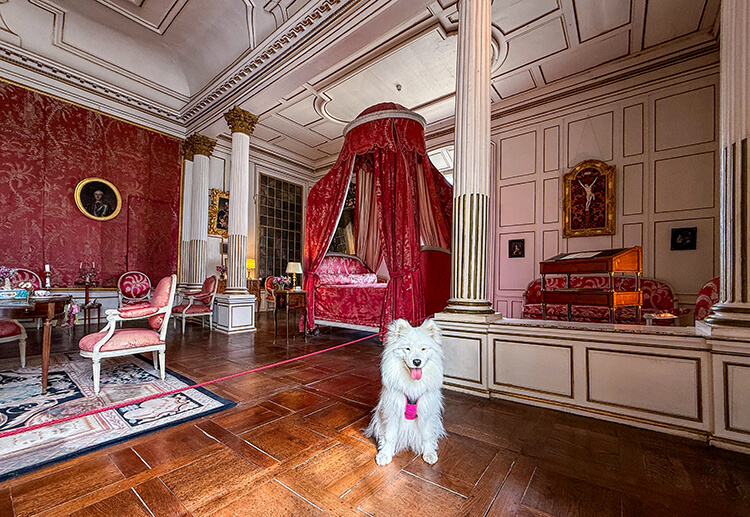
What isn’t a fantasy is that Château d’Ussé is entirely dog-friendly. It’s one of just a few Loire Valley châteaux that welcome dogs of any size on a leash both in the gardens and to tour the richly decorated castle itself. Other Loire Valley châteaux are also dog-friendly, but require dogs to be carried or in a bag to visit the castles themselves. There is no additional ticket or fee to visit Château d’Ussé with a dog.
Enjoy a relaxing stroll through the terraced gardens to end the visit. And finally, don’t miss the walk across the stone bridge for the most breathtaking view of Château d’Ussé.
Getting to Château d’Ussé
Château d’Ussé is located 15 kilometers from Azay le Rideau, Langeais and Chinon. The castle is best visited by car as there is not a train station nearby. There is a free car park with 200 spaces just below the castle.
Château de Langeais
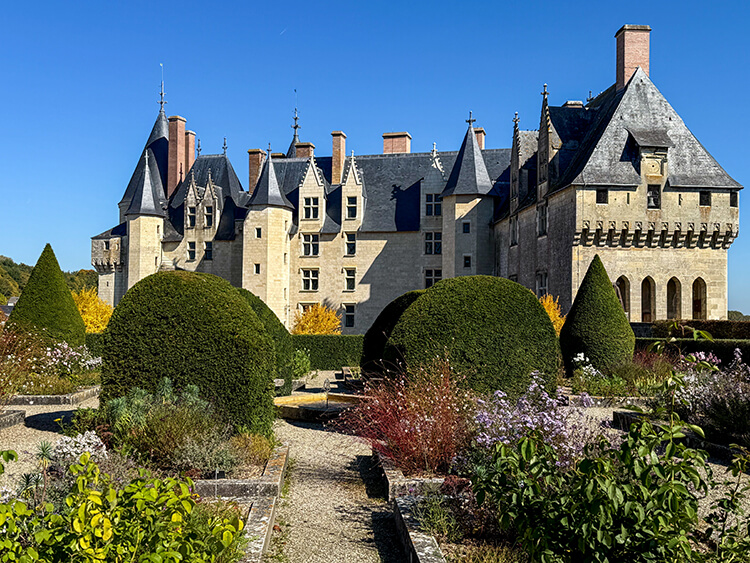
Château de Langeais is not only the oldest Loire Valley castle, but also the oldest keep in France. Dating back to the 10th century, Château de Langeais has been witness to some remarkable moments in French history. Located right in the heart of the village of Langeais, the village built up around the castle that was constructed between 992 and 994 by the renowned builder Fulk Nerra, an early Count of Anjou.
Unfortunately the castle was destroyed during the Hundred Years War, and Louis XI commissioned the new castle in 1465. It was finished just four years later in 1469.
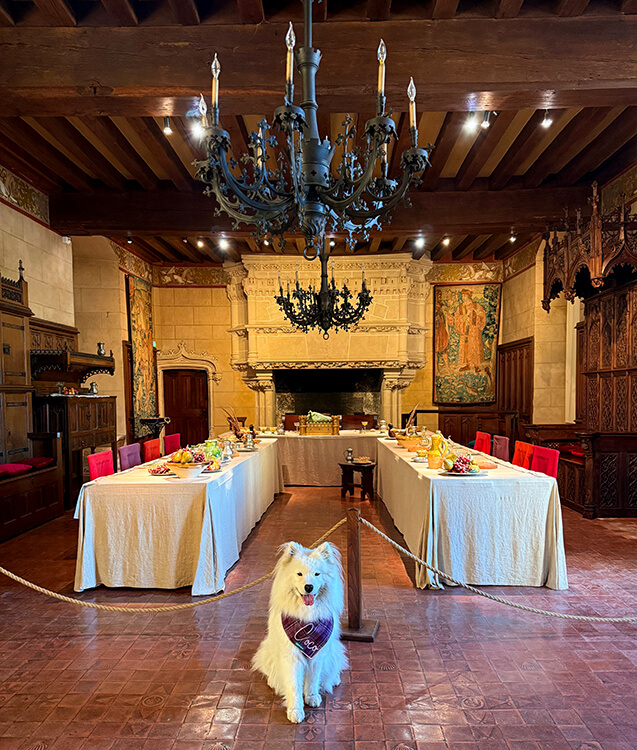
The castle has an exceptional collection of tapestries, many of which come from Aubusson – a French town in the Nouvelle Aquitaine known for tapestry weaving. The rooms also tell the story of the secret marriage of Charles VIII and Anne of Brittany at the château in 1491. Their marriage marked the end of the Duchy of Brittany’s independence and sealed Brittany’s permanent union with France.
The park is a lovely place to explore, and the ruins of the original castle can be seen. You can even climb the treehouse for a panoramic view over the castle and village. And the park offers many shady spots perfect for a picnic.
Along with Château d’Ussé, Château de Langeais welcomes dog on a leash to tour both the castle and the gardens. There is no additional ticket or fee to visit Château de Langeais with a dog.
Getting to Château de Langeais
It is possible to visit Château de Langeais by train. The village of Langeais is served by train on the Tours-Saumur line and Château de Langeais is an easy 5 minute walk from the station.
Château de Villandry
Château de Villandry was the last of the major Loire châteaux built during the Renaissance in the Loire Valley, though there was known to be a fortress on the location in the Middle Ages. The fortress was destroyed, with the exception of the 12th century keep that can still be seen today.
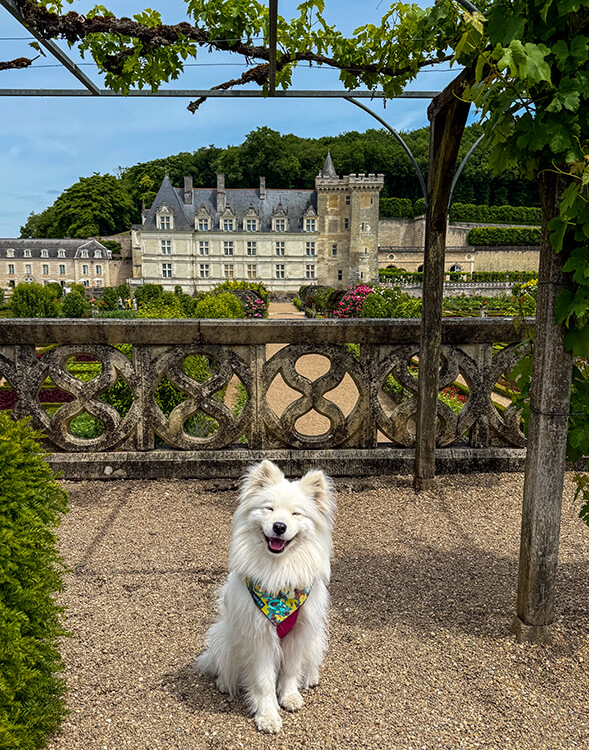
Château de Villandry is particularly famous for its magnificent Renaissance gardens and are a must-see when visiting the Loire Valley. The gardens boast 115,000 flowering and vegetable plans, 30 kilometers of box hedges, and 1015 lime trees that are maintained by a full time team of gardeners year round.
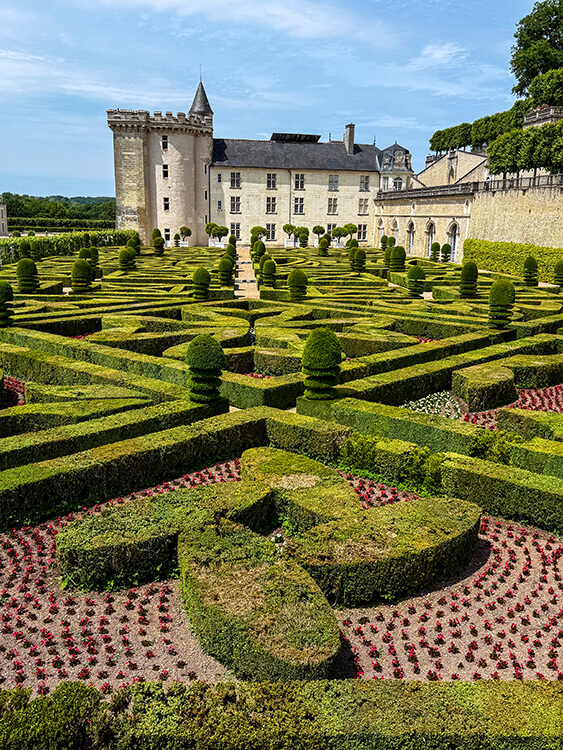
The 7 hectares of gardens are spread out over four terraced levels and are among the most beautiful in the Loire Valley. There’s a water garden with small ponds and fountains, a vegetable garden where the box hedges are planted around the vegetables to form shapes, an ornamental garden with vibrant flowers planted seasonally, a sun garden laid out in the shape of a sun, a labyrinth, and many shady spots with sun loungers to relax.
Both the castle and gardens are dog-friendly, with dogs in a bag or carried welcome to tour the castle. Château de Villandry offers several types of tickets: castle and gardens, gardens only, or a combination ticket for Château de Villandry, Fortress of Chinon and Château d’Azay-le-Rideau. I opted for the gardens only ticket, and dogs on a leash are welcome throughout the gardens free of charge.
Getting to Château de Villandry
Château de Villandry is located around 20 minutes drive from Tours or Saint-Pierre-des-Corps stations. While you can take a train to either Tours or Saint-Pierre-des-Corps station and then take a taxi to Château de Villandry, the castle is best visited by car. There is a free car park located near the castle.
Château d’Azay-le-Rideau
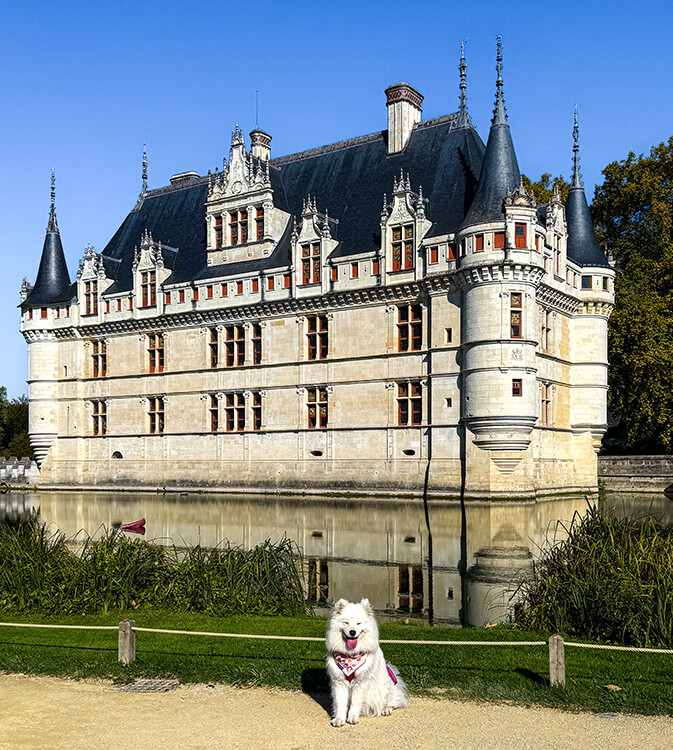
Château d’Azay-le-Rideau was built by François I and is set on a small island in the middle of the Indre River. The river creates a water mirror effect reflecting the facade of the 16th century castle. The château, built between 1518 and 1527, is considered one of the foremost examples of early French renaissance architecture and is a real jewel of the Loire Valley.
Definitely one of my favorite Loire Valley castles I visited inside, Château d’Azay-le-Rideau’s rich rooms offer a glimpse into the sumptuous lives of nobility during the French Renaissance. You also won’t want to miss the iconic staircase, which is the oldest preserved ramp on ramp style staircase, first appearing at the beginning of the 16th century.
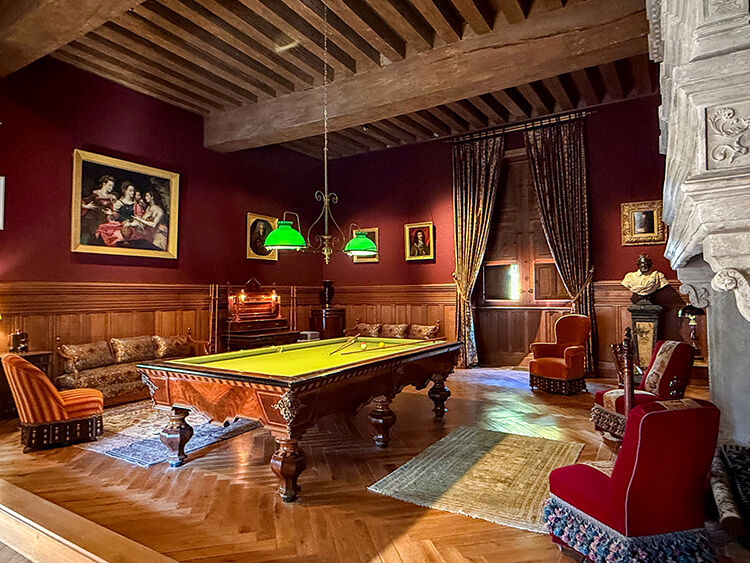
I also particularly enjoyed the exhibition of Hidden Portraits by German artist Volker Hermes displayed as you move throughout the rooms. The collection is historical portraits revisited to cover the faces with ornaments and draw attention to the luxurious fabrics and jewels from costumes from the 16th – 19th centuries.
The castle is surrounded by 8 hectares of parkland with various tree species that would have been quite exotic in the 19th century when the park was built. Various footbridges cross the river, creating a romantic setting.
Dogs either in a bag or carried can visit both the gardens and tour the interior of the castle. While I did have Coco’s K9 Sport Sac with me, she was very happy to watch the squirrels in the gardens while I toured the stately apartments and drawing rooms decorated in the 19th century neo-renaissance style. Dogs on a leash are welcome throughout the park free of charge. A ticket is needed to access the castle and gardens, and you can book your Château d’Azay-le-Rideau ticket online in advance.
The château sits at the edge of the village of Azay-le-Rideau, and be sure to take time to stroll the charming village full of independent shops and galleries before having lunch at one of the village restaurants.
Getting to Château d’Azay-le-Rideau
It is possible to visit Château d’Azay-le-Rideau by train. The village of Azay-le-Rideau is served by train on the Tours-Chinon line and Château d’Azay-le-Rideau is a 2 kilometer walk from the station.
If coming to Château d’Azay-le-Rideau by car, there are paid car parks near the village and château.
Château de l’Islette
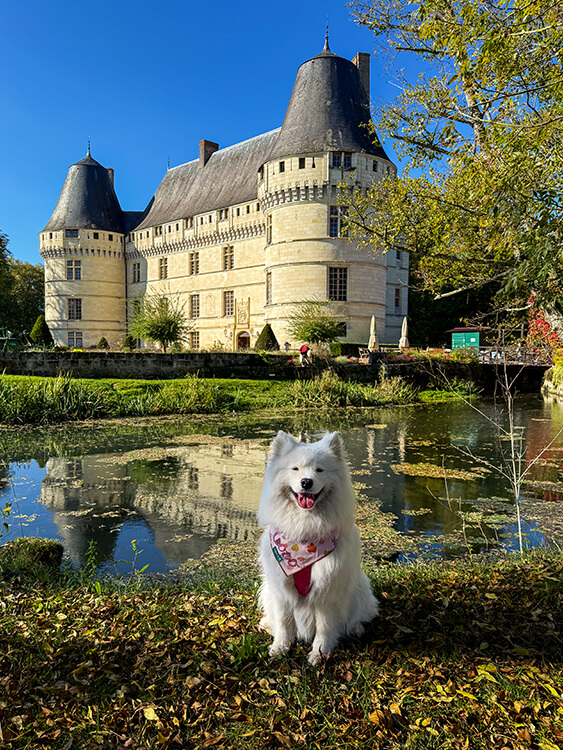
Château de l’Islette is the neighbor of popular Château d’Azay-le-Rideau, and this Renaissance Loire Valley castle is definitely worth a visit. The castle famously sheltered the tempestuous love affair between the two great sculptors Camille Claudel and Auguste Rodin.
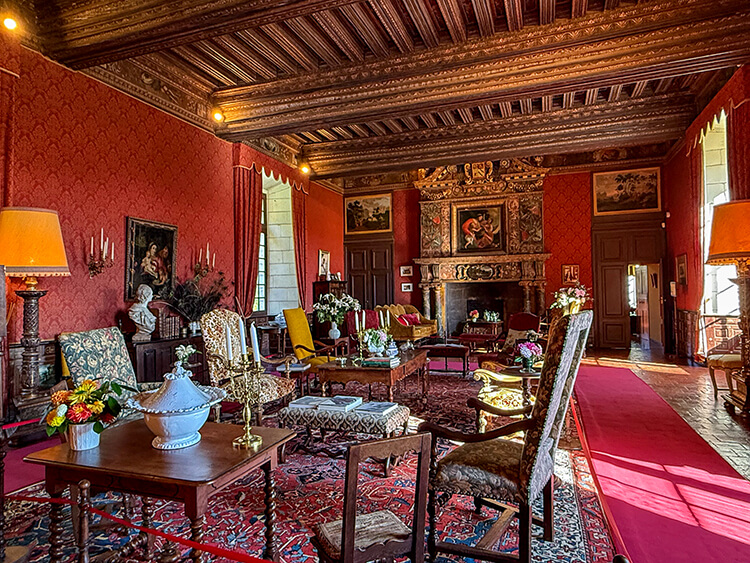
Rodin worked on his famous Balzac and Camille Claudel sculpted the bronze La Petite Châtelaine, which is on permanent display in the castle.
Unlike at most Loire Valley châteaux, picnicking is encouraged at Château de l’Islette. There are many gorgeous spots throughout their 14 hectare parkland to enjoy a relaxed picnic with a castle view. The English-style park also includes several centuries old trees, an alley of plane trees lovely to walk for some shade, an American walnut, and many chestnut trees.
You can also rent boats at Château de l’Islette to row around the castle on the Indre River.
There is also a costume room where you can borrow costumes for the perfect photo shoot – or just to be a princess for your visit.
Dogs are welcome throughout the park on a leash free of charge. Only small dogs in a bag are allowed inside the castle, which is the current home of its’ owners.
Getting to Château de l’Islette
It is possible to visit Château de l’Islette by train. The village of Azay-le-Rideau is served by train on the Tours-Chinon line and Château de l’Islette is an easy 1 kilometer walk from the station.
Château de l’Islette is located 22 kilometers from Chinon by car. There is a free car park across the road from the château.
Château du Rivau
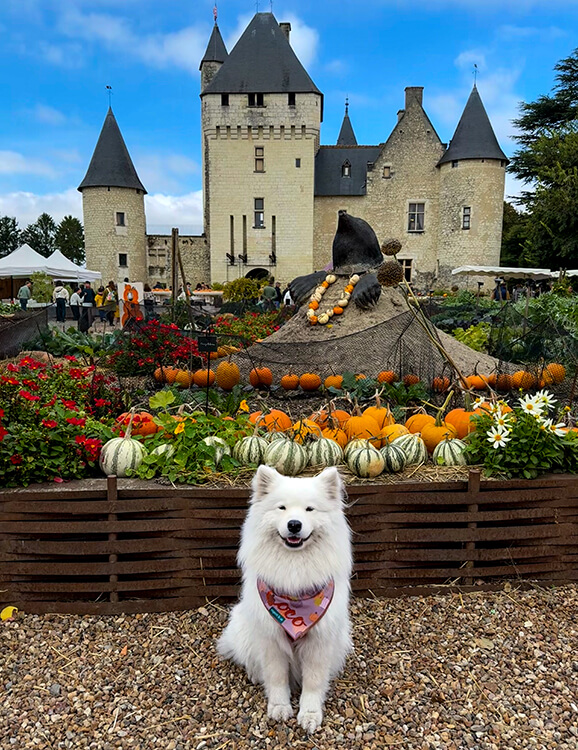
Château du Rivau is known for its well-preserved medieval architecture and gorgeous gardens. The castle began as a fortified house in the 13th century and was brought as a dowry by Anne de Fontenay when she married the First Chamberlain to Charles VII, Pierre de Beauvau. The house was further fortified with towers with turrets, a moat, machicolations, a drawbridge and a wall walk typical of the Middle Ages in the 15th century.
The gardens of Château du Rivau are a highlight of a visit. The 6 hectares of gardens tell some of the most famous fairytales through artwork, games and botanical gardens.
The best time to visit Château du Rivau is during the annual Fête de la Citrouille. For one weekend only each October, the château celebrates fall with a pumpkin festival. Not only are the château gardens decorated with thousands of pumpkins, there are also around 50 vendors for a market throughout the gardens.
The château’s restaurant, La Table des Fées, also offers some pumpkin themed dishes like pumpkin soup, pumpkin cake and pumpkin spice lattes.
There are also picnic tables throughout the gardens, and picnics are allowed.
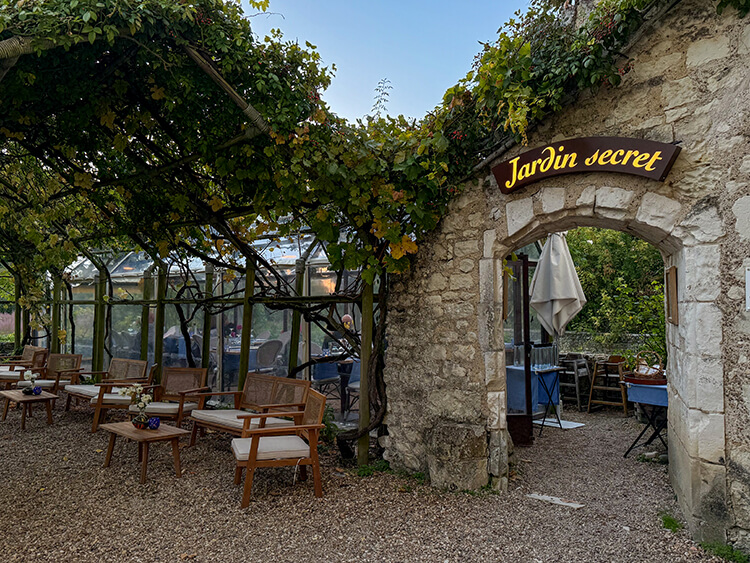
I had truly the best meal I had in the Loire Valley at the château’s gourmet restaurant, Le Jardin Secret. The gourmet restaurant is set in a greenhouse nestled among the vines and rose gardens of Château du Rivau. Chef Andrea Modesto creates a menu with produce picked from the château’s vegetable gardens and sources local products. It was even paired with a jammy bottle of Château du Rivau’s Donjon du Rivau Chinon Cabernet Franc.
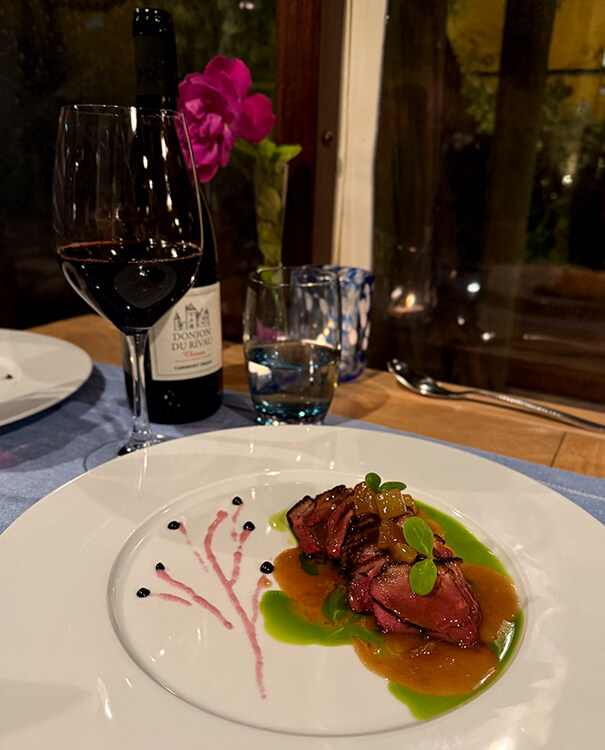
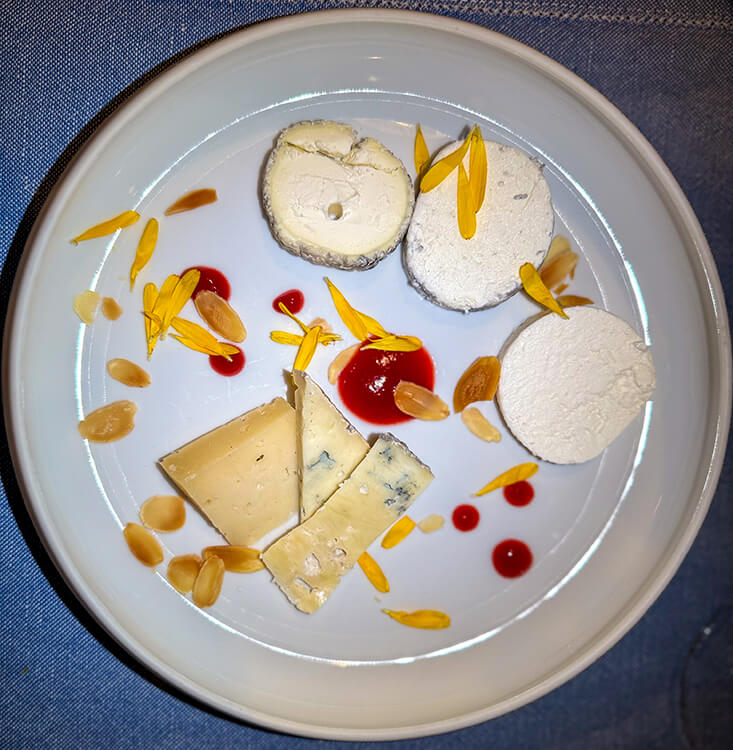
The menu changes regularly to feature seasonal, local ingredients. My tasting menu included a starter of zucchini flowers stuffed with caramelized onions with curcuma sauce, a main course of duck breast with pears, and I choose the cheese course with 5 types of goat cheese from the Loire Valley: Bleu de chèvre (Vazereau), Brie (Vazereau), and Sainte-Maure de Touraine in 3 stages (Vazereau).
Dogs on a leash are welcome in the château gardens, but cannot visit the interior of the castle.
Getting to Château du Rivau
Château du Rivau is best visited by car as there is not a train station nearby. There is a free car park at the castle, and an overflow free car park about 10 minutes walk from the castle.
Château de Valençay
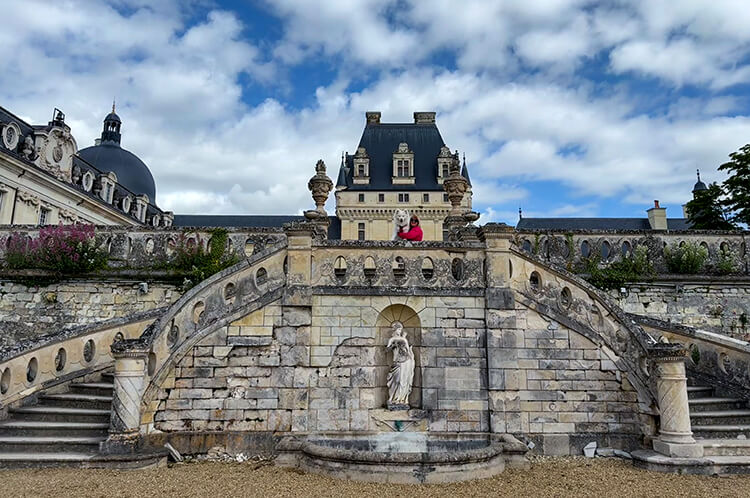
Château de Valençay’s golden age during its history was when it was occupied by the Princes of Talleyrand-Périgord, bought by Charles-Maurice Talleyrand-Périgord with financial assistance from Napoleon. As the Princes of Talleyrand-Périgord were ranked among German nobility, the château was spared German occupation during WWII. It became a secret depository for the Louvre Museum, who hid priceless masterpieces and treasures like the Winged Victory of Samothrace and the Venus de Milo during WWII.
Château de Valençay is also home to the largest labyrinth in France. Try to make your way through the 2000m² maze.
You can also uniquely rent historic cars fitted with electric motors to tour the 53 hectare park where you can see deer, peacocks and even llamas.
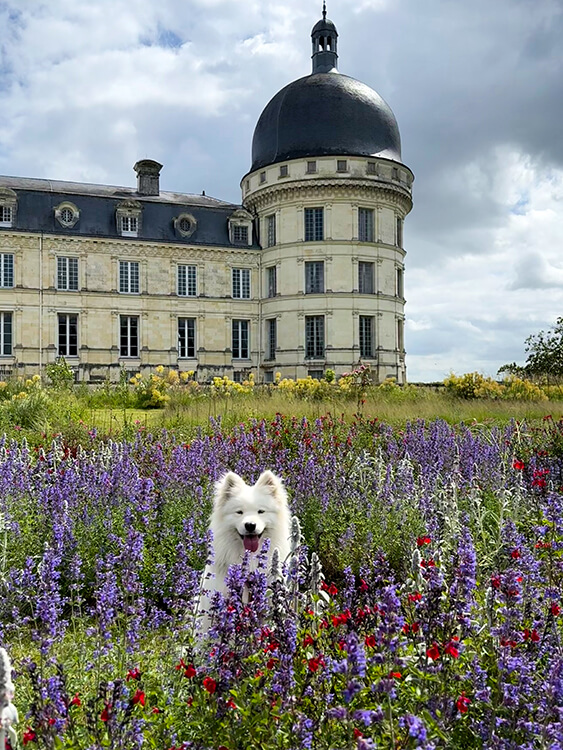
The beautiful gardens and park are dog-friendly, but dogs must be carried in a bag to visit the château. You can purchase a gardens only ticket and dogs on a leash are welcome free of charge. There’s also a restaurant and a snack bar located in the château park.
Just a short walk from Château de Valençay, explore a collection of automobiles dating back to 1898 at the dog-friendly Musée de l’Automobile à Valençay. Dogs on a leash welcome throughout the museum. There is also a combo ticket available for visiting both Château de Valençay and the Musée de l’Automobile à Valençay.
Getting to Château de Valençay
It is possible to visit Château de Valençay by train. The village of Valençay is served by train and Château de Valençay is an easy 10 minute walk for 600 meters from the station.
If arriving by car, Château de Valençay is located in the center of the village. There are car parks nearby at the tourist office and on on Avenue de la Résistance. If also visiting the Musée de l’Automobile à Valençay, you can park at the museum and walk to the château.
Château de Chambord
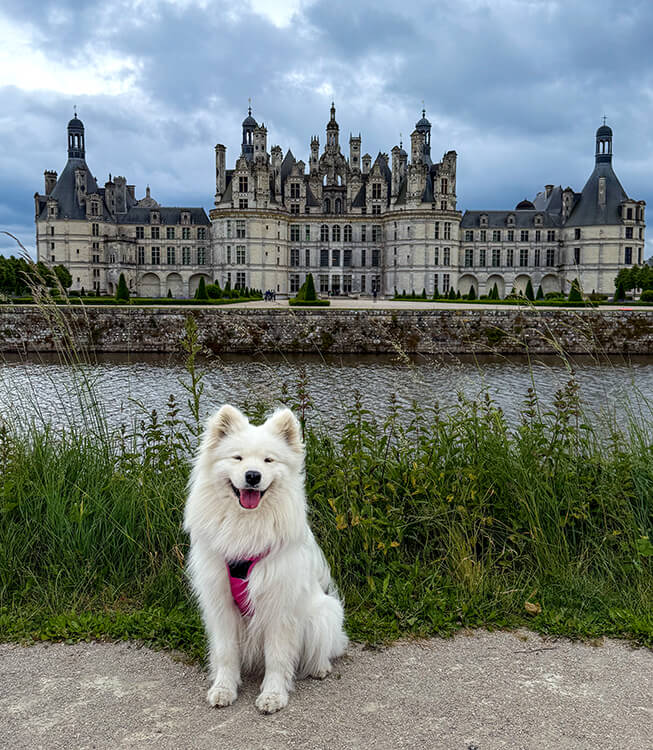
Château de Chambord is the most famous and recognizable château of the Loire Valley. Though neither the château nor gardens are dog-friendly, I couldn’t not see this symbol of the French Renaissance while visiting the Loire Valley.
Built by Francois I between 1519 – 1547, this impressive castle was built as a hunting lodge. A hunting lodge with 426 rooms, 83 staircases, and 282 fireplaces. And ironically, it was so remote that Francois I only spent a mere 50 days there. It was a feat for the king to visit his country hunting lodge, needing to pack up over 2000 staff, all the food and even the furniture to bring along with him.
The Château de Chambord park grounds are dog-friendly, and it is actually the largest enclosed park in Europe. Encircled by 32 kilometers of walls, the Chambord park is the size of Paris. It is free to visit the park grounds.
There are kilometers of trails to explore the park, including a 4-kilometer loop along the canal where you can take in views of the iconic Château de Chambord from every angle.
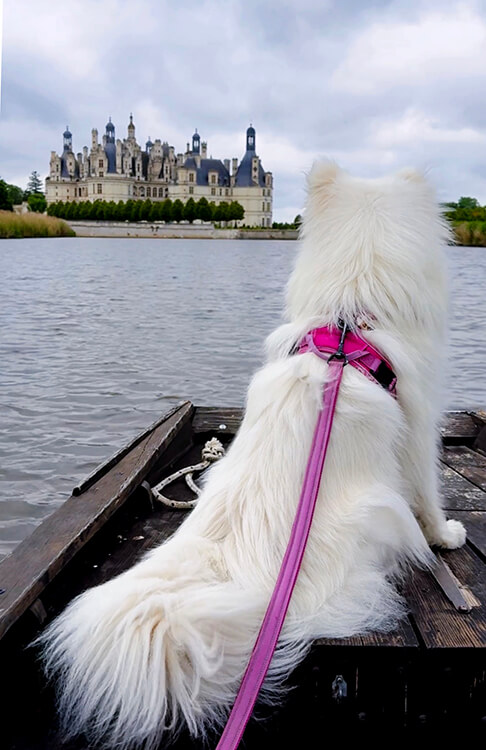
For a unique view of Château de Chambord, rent one of the electric punts. You’ll be your own captain on the canal and the punts are dog-friendly.
The electric punts accommodate 1-5 passengers and are 22€ for 30 minutes.
And if you’re visiting Château de Chambord with at least 2 people, you can always trade off staying with your pup so you can visit the castle interior and gardens one at a time. Save time by booking Château de Chambord skip-the-line entry tickets.
Getting to Château de Chambord
It is possible to visit Château de Chambord by train.to Blois-Chambord station, then transfer to the Line 2 shuttle bus from the station to the castle.
If arriving to Château de Chambord by car, there is ample paid parking within the park.
Other Dog-Friendly Things to Do in the Loire Valley
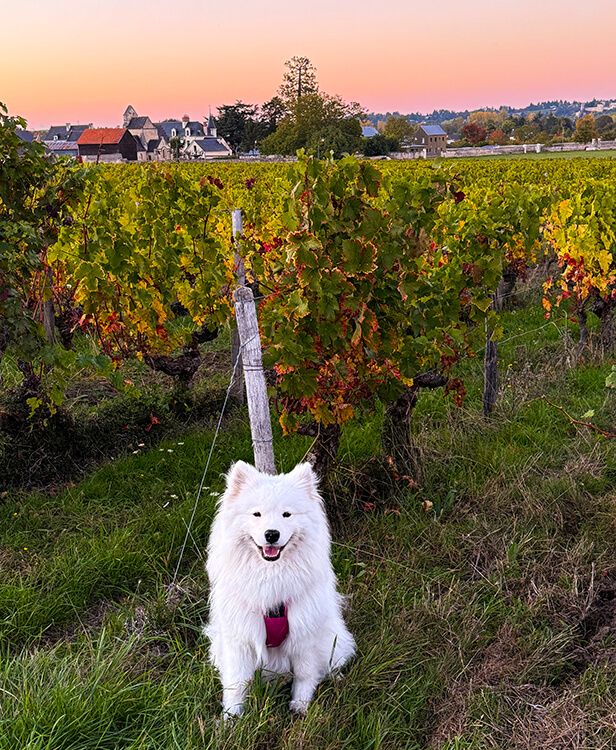
The Loire Valley is most famous for its castles, but there is much more to see and do beyond touring the countless castles and gardens. From wine tasting in France’s largest wine region to canoeing under the Loire Valley’s most recognizable castle, or even hot air ballooning over the Loire Valley, you’ll be spoiled for choice. Here are a few ideas for dog-friendly attractions beyond the Loire Valley castles to add to your Loire Valley itinerary:
Canoeing at Château de Chenonceau
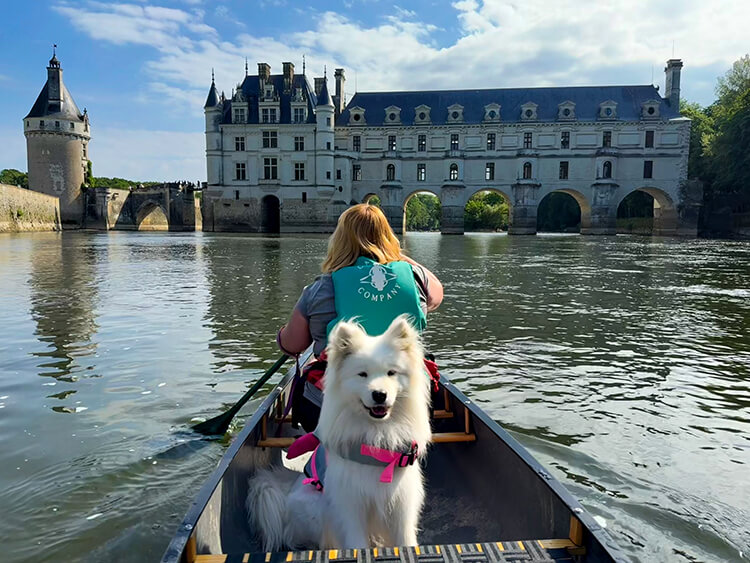
One of the most beautiful and peaceful ways to discover Château de Chenonceau is by gliding on the River Cher as the castle comes in to view, reflecting on the river. It’s one the most unique views you can get of Château de Chenonceau, with the castles iconic gallery stretching across the river.
The canoe trip under the castle is a 6 kilometer round trip canoe trip starting from the Canoe Company base camp. You can paddle through the arches of the gallery before turning around to paddle back to base camp. This canoe trip is suitable for all levels of canoeing from beginner. A longer route crossing the dam with a shuttle to return to the base camp is also possiblee.
As the castle comes in to view, it is a spectacular sight to linger over peacefully on the river. Not to be missed for the spectacular sight of Château de Chenonceau rising up directly before you and shimmering on the river, start your day with the canoe trip to get your very first sight of the castle. You can even choose a dawn paddle with breakfast in the canoe.
The canoe trips are dog-friendly. Life vests are provided for the humans, but a life vest is required and you must provide your own dog life vest for any pups accompanying you on the trip.
Wine Tasting at Château de la Grille
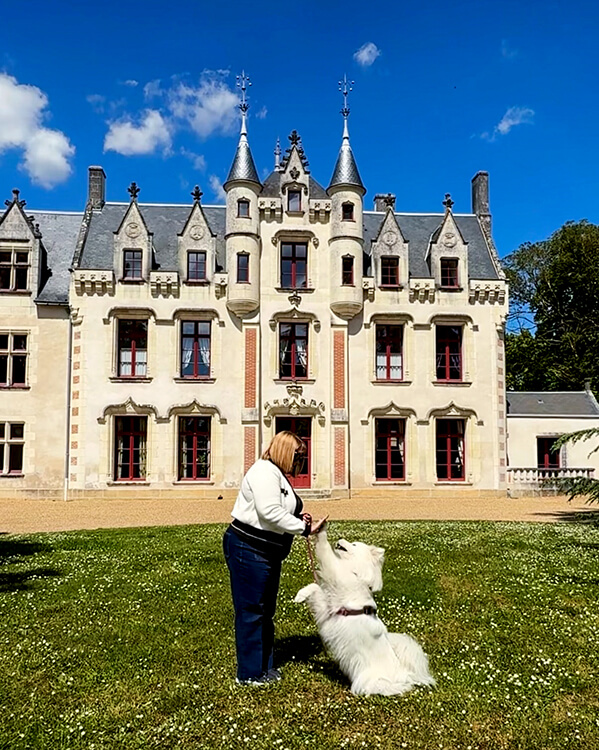
Discover Chinon AOC wines on a dog-friendly wine tour and tasting at Châeau de la Grille. Unusual for the Loire Valley, Chinon AOC is mostly red wine, with 2-5% rosé and a little white wine.
Château de la Grille is planted with only one variety of grape: Cabernet Franc. Cabernet France is the grape that dominates the Middle Loire areas like Chinon, and is perfect for a red wine drinker like me.
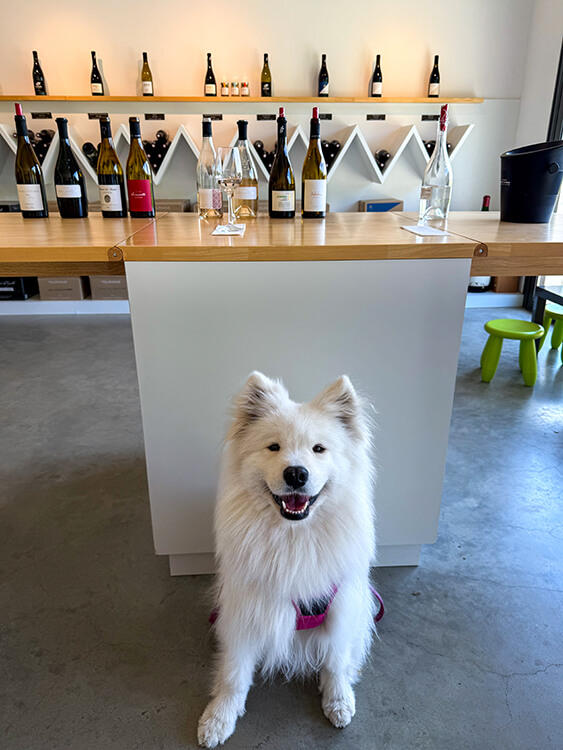
Château de la Grille is actually one of five Loire Valley wine estates in the Baudry & Dutour portfolio. I tasted the entire range, but it was the Chinon AOCs that I fell in love with. The Chinon AOC ages for 12 to 15 months in barrels, then the wine is bottled in 18th-century-style Champagne bottles, a signature of Château de La Grille since the owner hails from Champagne.
The tour and tasting is by appointment only and is 7€ per person. Dogs are welcome throughout. The visit fee is also waved with the purchase of a bottle.
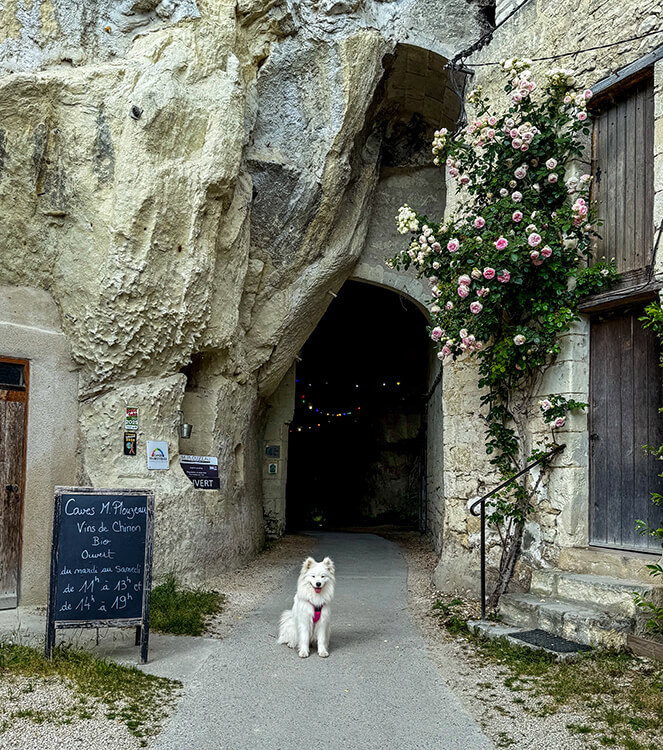
Wine Tasting at Caves Plouzeau
Wine tasting at the Caves Plouzeau located deep beneath the imposing Forteresse Royale de Chinon is a unique experience. These caves have been dug out beneath the Royal Fortress of Chinon as early as the 10th century. The network of troglodytic galleries is part of a long tradition of quarrying tuffeau, the region’s iconic stone. And the particular location of the Caves Plouzeau connects the caves directly with the fortress by two shafts.
The first shaft is an extraction shaft and the second is a water well, which still holds water at a depth of 96 meters. Discovering the ingenuity of medieval architecture through a self-guided tour of the caves with information panels lends to the fascinating atmosphere.
The unique setting is perfect for aging wine, and the Château de la Bonnelière wines are aged for 12 – 36 months in demi-muids. This is considered a hallmark of the Chinon wine region and adds to the complexity and elegance of the wines.
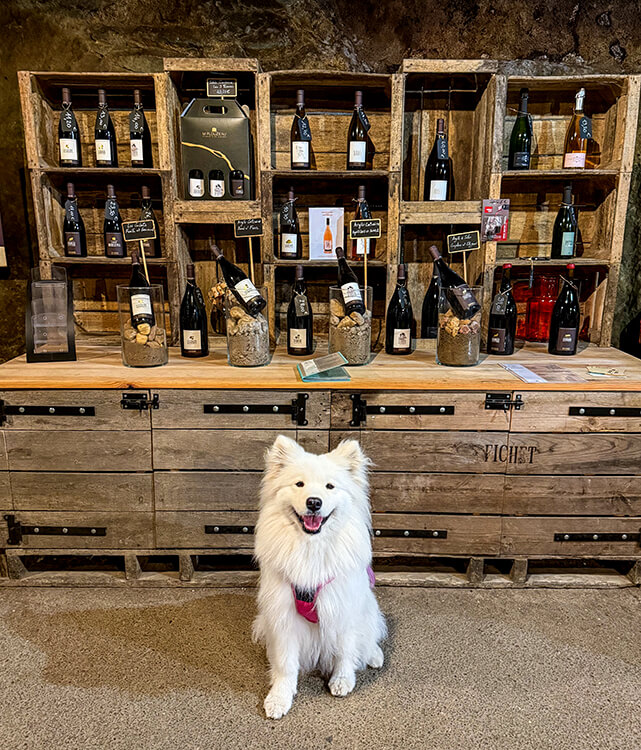
End the dog-friendly tour of the caves with a gourmet tasting of 5 Château de la Bonnelière wines paired along with local charcuterie and cheese. You can also purchase wines in the cave boutique as a souvenir of your Loire Valley trip.
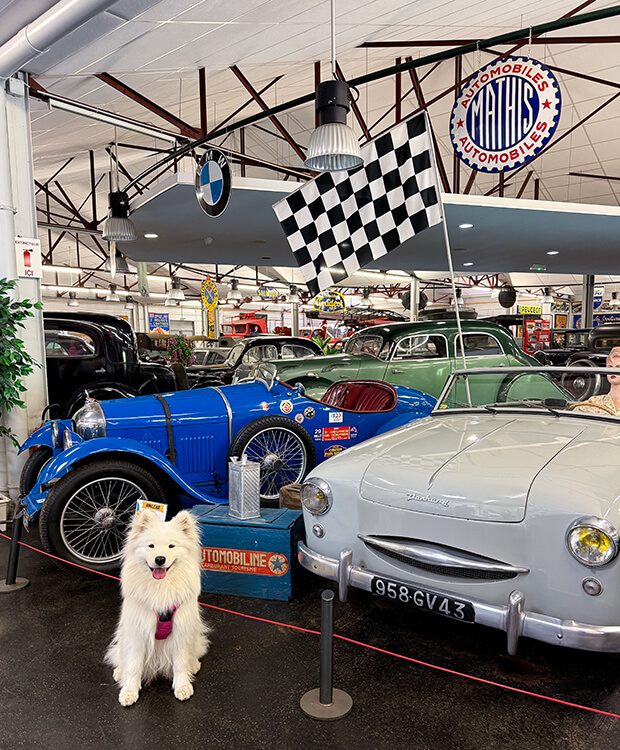
Explore the Car Collection at Musée de l’Automobile à Valençay
Discover more than 100 years of French automobile history through the private collection of the Guignard family at the dog-friendly Musée de l’Automobile à Valençay.
The Guignard brothers were passionate about cars from the beginning, opening a garage in 1906 that was dedicated to the repair and maintenance of early engine powered automobiles. They soon began a collection of not only cars, but license plates, tools, accessories and engine parts. The Guignard family opened the first Musée Automobile du Centre in their family garage in Vatan.
It was in 1981 that the second generation of the Guignard family moved the growing collection to a building that formerly housed a merry-go-round at the Château de Valençay, giving a new prestige to the collection. Finally in 2001, the collection moved to the 1600 m2 of exhibition space located just a short walk from Château de Valençay.
The museum proudly boasts 60 vehicles preserved in working order spanning from 1898 to today. Among the permanent are some rare vehicles like a 1936 Bugatti, of which only around a dozen were ever produced, and a Delaunay-Belleville from 1908. The Delaunay-Belleville was a requisition from the Battle of the Marne in 1914, and is a unique testimony to the role of automobile during major events in history.
Dogs are welcome on a leash throughout the museum, and can even take a photo with you in one of the antique cars.
Best Places to Stay in the Loire Valley with a Dog
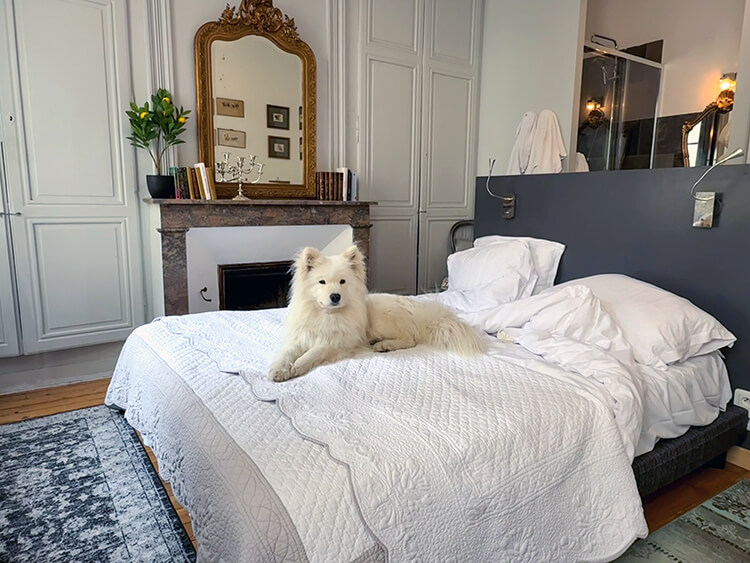
Nature & Châteaux, Chinon
Chinon is an excellent base for exploring many of the dog-friendly Loire Valley castles and attractions mentioned in this guide. The picturesque town is small, but home to a well-preserved mix of half-timbered and stone buildings, a number of restaurants, the Caves Plouzeau wine caves and the Fortress of Chinon.
Nature & Châteaux offers charming self-catering apartments located right in the center of Chinon and is dog-friendly. Each apartment is uniquely decorated and has a seating area, dining area, fully equipped kitchenette, bedroom, and bathroom with a hairdryer.
Bicycle rentals are available from Nature & Châteaux, and many Loire Valley castles are within cycling distance of Chinon.
There is city parking nearby Nature & Châteaux, and it is easy to walk to many restaurants, the wine caves, and the Forteresse Royale de Chinon.
Relais des Trois Châteaux, Cour-Cheverny
Châteaux like Chambord, Blois and Cheverny are located a fair drive from Chinon, so you might want to break up your Loire Valley trip with another base for exploring different areas.
Relais des Trois Châteaux is a hotel located within walking distance of Château de Cheverny, which is particularly convenient as Château de Cheverny is not a dog-friendly Loire Valley castle, and just 20 minutes drive to Château de Chambord.
Rooms are comfortable for short stays, have air conditioning, a mini fridge, walk-in showers and a hairdryer in the bathroom and are dog-friendly.
There is also an onsite restaurant, though we did not try the Restaurant Les Trois Marchands during our stay.
The hotel has gardens and grassy areas perfect for walking your pup for potty breaks.
This article contains affiliate links. When you shop on Amazon or book on Expedia and GetYourGuide through our affiliate sites, we earn a small commission at no additional cost to you.
