Chianti is more written about, drank and talked about than any other Italian wine. Yes, even more than Barolo – the King of Italian wines. Chianti is considered the perfect food wine, so what better way is there to discover Chianti Classico than with a winery tour and tasting paired with a home cooked Tuscan lunch?
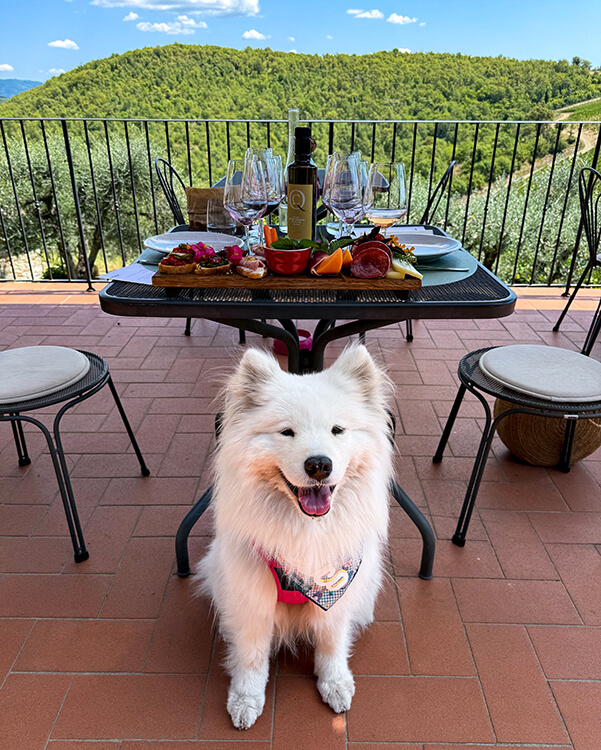
Querceto di Castellina offers the perfect dog-friendly Chianti Classico wine experience at their gorgeous winery and agriturismo.
Chianti Wine
Chianti is one of the world’s most appreciated and one of Italy’s most popular red wines. It became synonymous with Italian-American culture after Chianti became the first Italian wine to be mass exported to the US post WWII. But back then, Chianti was considered to be cheap and the straw covered bottles weren’t taken too seriously.
Chianti wines have come a long way from being branded cheap since. These days Chianti wines are high quality, well-balanced wines and the lush red berry fruit notes are reflective of their Tuscan terroir. That is what makes Chianti a perfect food wine that can be paired with a diverse range of foods from pastas and hearty soups to both red and white meat.
But a Chianti wine isn’t as simple as being dubbed a Chianti just because it comes from the geographical Chianti region located between Florence and Siena.
Named for the region Chianti wine is produced in, Chianti is predominately made from the Sangiovese grape with small allowances for other approved red grapes. These days Chianti producers mostly opt to produced 100% Sangiovese Chianti Classico wines.
And speaking of Chianti Classico, it is not the same as Chianti. Both are named for the delineated Chianti wine zone in Tuscany, but are divided into two primary DOCG designations: Chianti DOCG and Chianti Classico DOCG.
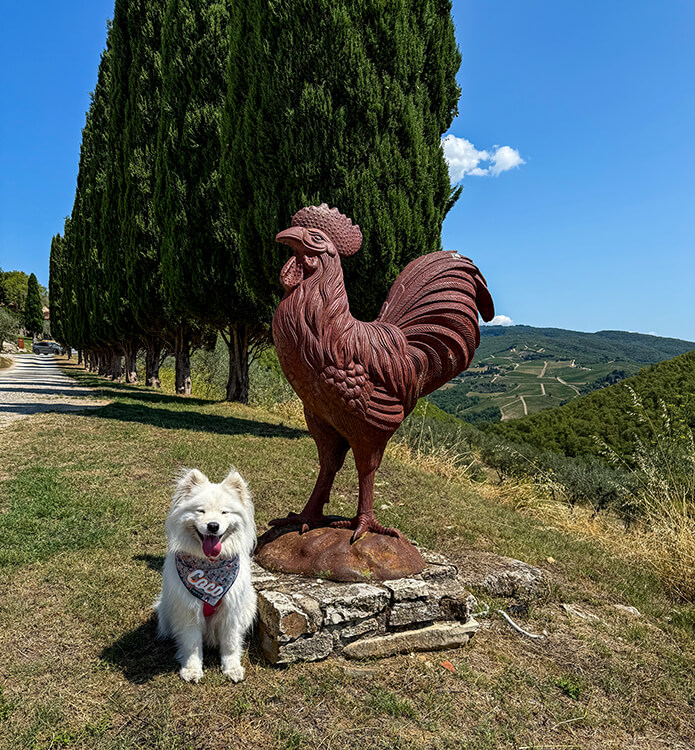
Chianti Classico DOCG is produced in the historic, premium heartland between Florence and Siena where the oldest roots are found. Traditions are maintained through strict rules for how the wines are produced and aged. Chianti Classico DOCG wines will always have the black rooster representative of Chianti on the label.
Chianti DOCG comes from a broader area encompassing Florence, Siena and Pisa, and there the rules are more loose for how the wines are produced and aged. Chianti DOCG wines tend to be younger, lighter and less complex than Chianti Classico DOCG. Chianti DOCG also has 8 sub-zones that can be presented on the label, such as Chianti Colli Senesi.
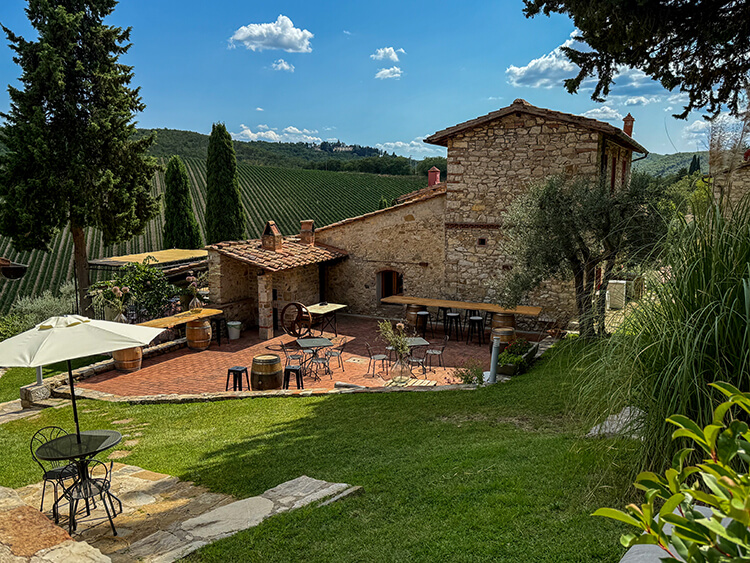
The History of Querceto di Castellina
The steep dirt driveway opened up to the beautifully restored 15th century structures of the winery and agriturismo overlooking a jaw-droppingly gorgeous view of Querceto di Castellina’s vineyards and olive groves. I could immediately see why Guido Masini fell in love with the estate when he laid eyes upon it in 1945.
A Florentine entrepreneur, Guido originally purchased the estate as a family country retreat. He started a few businesses from farming pigs to selling grapes.
It wasn’t until 1989 that Querceto di Castellina’s history as a winery began when Guido’s daughter Laura, along with her husband Giorgio Di Battista, took over management of the estate. They carefully restored the 15th century outbuildings, turning them in to apartments for the agriturismo. Laura also opened her Tuscan cooking school at the time.
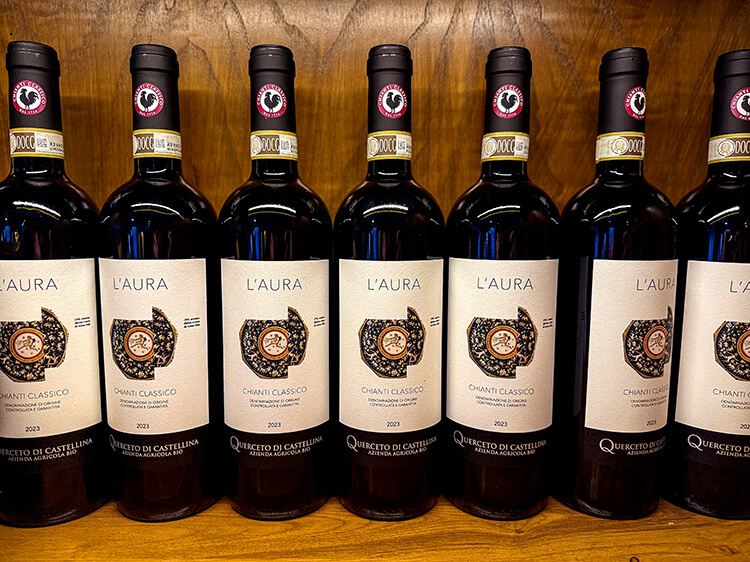
Laura and Giogio’s son, Jacopo, helped to restructure and replant the vineyards. The estate bottled their first vintage under the Querceto di Castellina label in 1998. Just 3300 bottles of the L’aura Chianti Classico were produced that first year.
That same year, they started to adopt sustainable farming practices and transitioned to a fully organic winery by 2009. Querceto di Castellina earned their official organic certification in 2012.
Querceto di Castellina remains today a family affair offering guest stays at their agriturismo, Tuscan cooking classes in Laura’s cooking school, olive oils from their olive grove, and a full range of wines produced under the Querceto di Castellina label.
The Wine Tasting Experience at Querceto di Castellina
Querceto di Castellina’s immersive food and wine experiences are designed to combine Laura’s love of Tuscan cuisine with Jacopo’s passion for wine.
While I would have loved to visit for one of Querceto di Castellina’s dreamy vineyard dinners hosted at a shared table set in their vineyards at sunset in summer, that will have to wait for for another return.
My visit for the winery tour and classic lunch began with a dog-friendly winery tour to learn more about Chianti Classico and the wines of Querceto di Castellina.
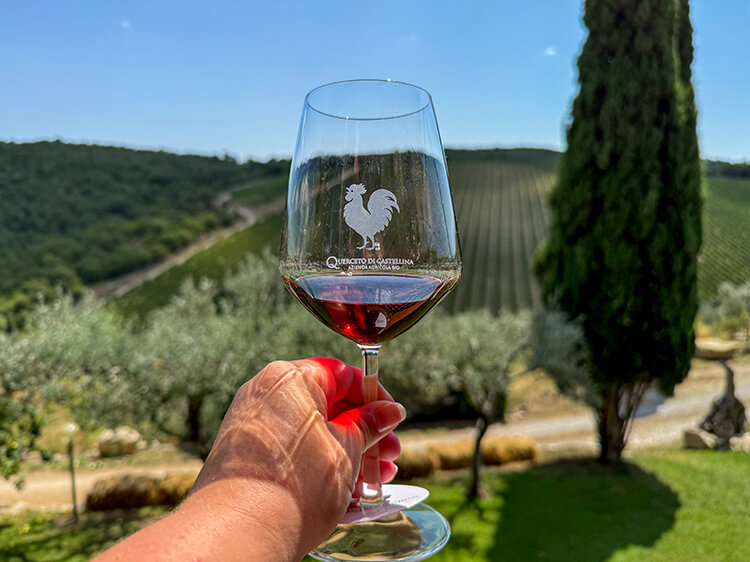
As we stood above the vineyards stretching out as far as the eye could see below, my guide explained that there are essentially three levels of Chianti Classico: Chianti Classico, Chianti Classico Riserva, and Chianti Classico Gran Selezione. Chianti Classico DOCG covers the historical heartland of the region, which lies between Florence and Siena. Winemakers in the Chianti Classico DOCG have stricter aging and blending requirements than winemakers in the Chianti DOCG and the wines must be produced with a minimum of 80% Sangiovese grapes.
Querceto di Castellina produces Chianti Classico DOCG and Chianti Classico Gran Selezione DOCG. Both the L’aura Chianti Classico DOCG and the Sei Chianti Classico DOCG Gran Selezione are produced from 100% Sangiovese grapes.
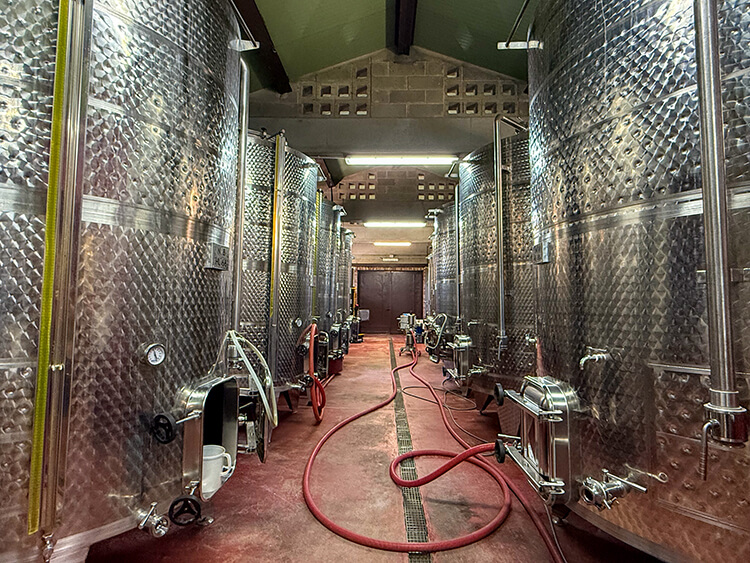
After the grapes are harvested, they are destemmed and crushed. The crushed grapes then rest in the stainless steel tanks for fermentation to take place.
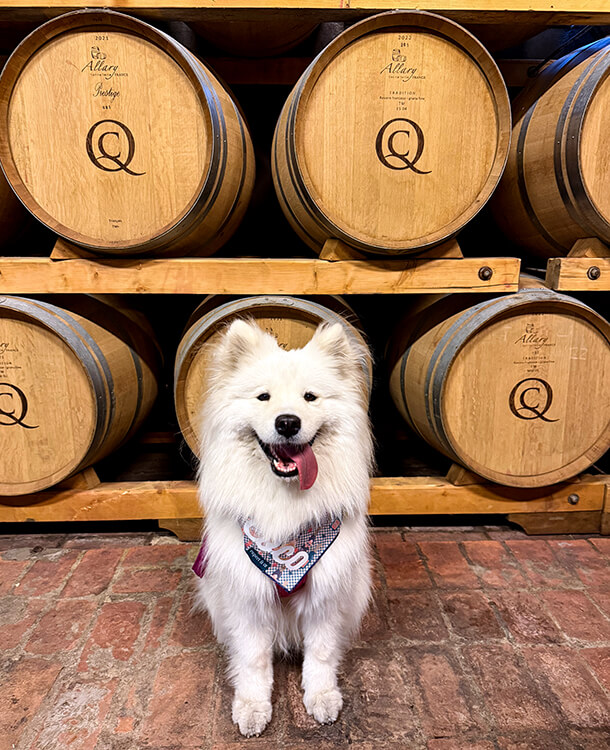
In the cellar, I learned that L’aura Chianti Classico DOCG is a blend of 50% aged for 12 months in French oak barrels and 50% aged for 12 months in concrete vats. The Sei Chianti Classico DOCG Gran Selezione is aged for 18 months in French oak barrels before refining for 12 months in the bottle.
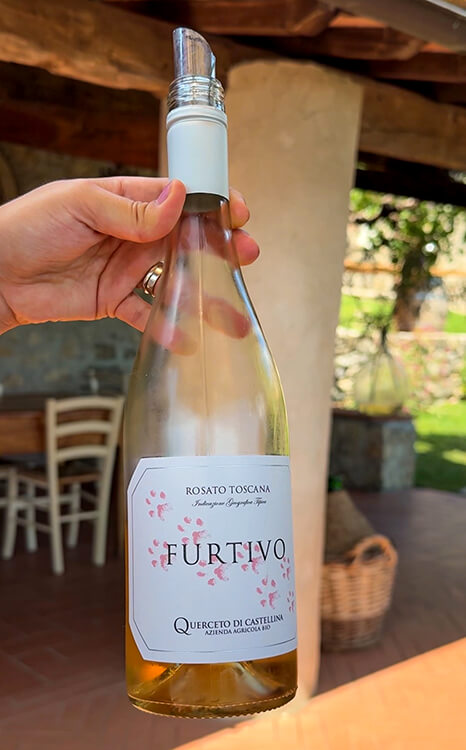
The tasting began with Querceto di Castellina’s rosato, on which the label adorably bears the paw prints of the winery dog, Elliot. It’s a 100% Sangiovese wine and aged in stainless steel tanks for 4 months.
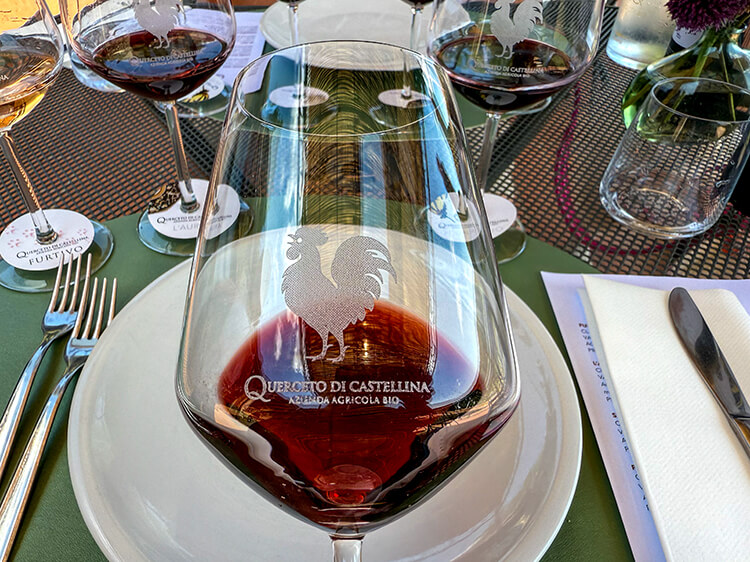
L’aura Chianti Classico DOCG, SEI Chianti Classico DOCG Gran Selezione, Podalirio Toscana (named for the striking butterflies you find around Querceto di Castellina), and the limited release Jac also followed. The Podalirio Toscana is made with 100% Merlot grapes and aged for 18 months in French oak and an additional 12 months aged in the bottle. Jac is made with 100% Cabernet Franc and aged for 20 months in French oak before a further 12 months aging in the bottle.
After the tasting of Querceto di Castellina’s range of wines, I enjoyed a lunch prepared by owner and chef Laura on the terrace overlooking the vineyards. I could select my favorite of the wines to enjoy with lunch.
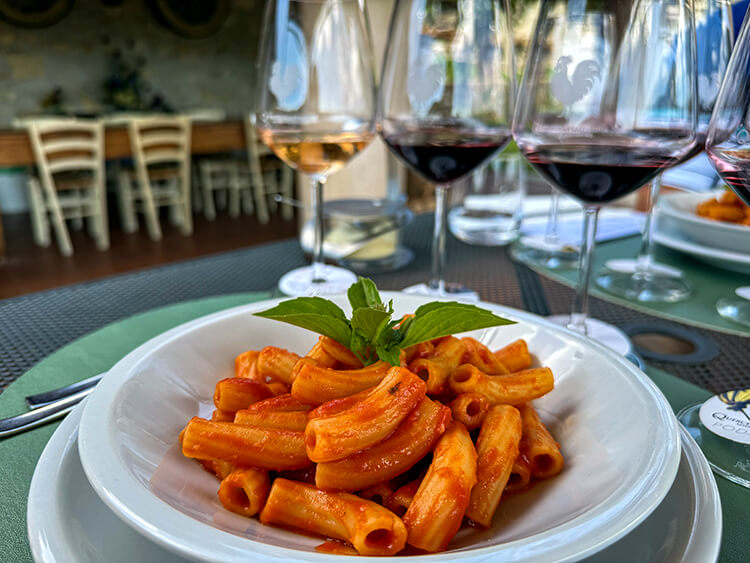
Lunch began with a delicious made from scratch pasta. In a simple tomato sauce and with fresh basil from Querceto di Castellina’s garden, the pasta was incredibly flavorful.
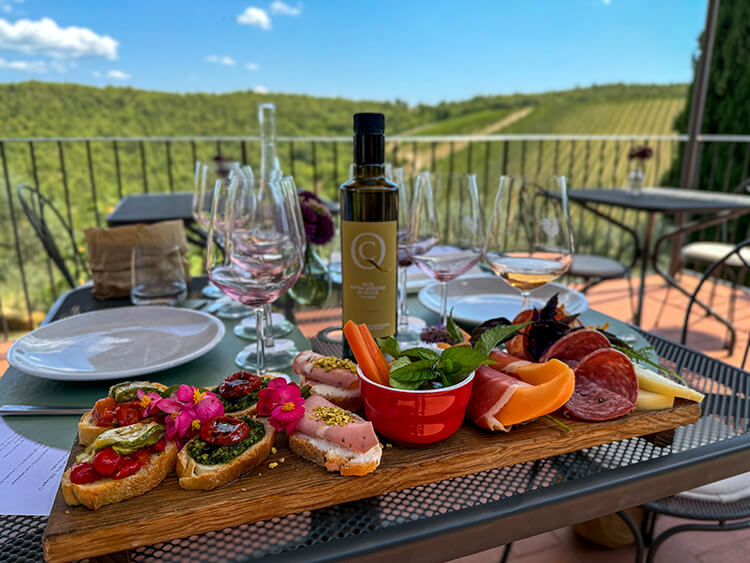
The most beautiful board with artisanal cheeses, crostini, locally sourced salumi, ripe melon, and pickled vegetables was the perfect main course on such a hot summer day.
Querceto di Castellina also produces olive oil from their olive groves, and a drizzle of the olive oils perfectly compliment the cheeses, salumi and crostini.
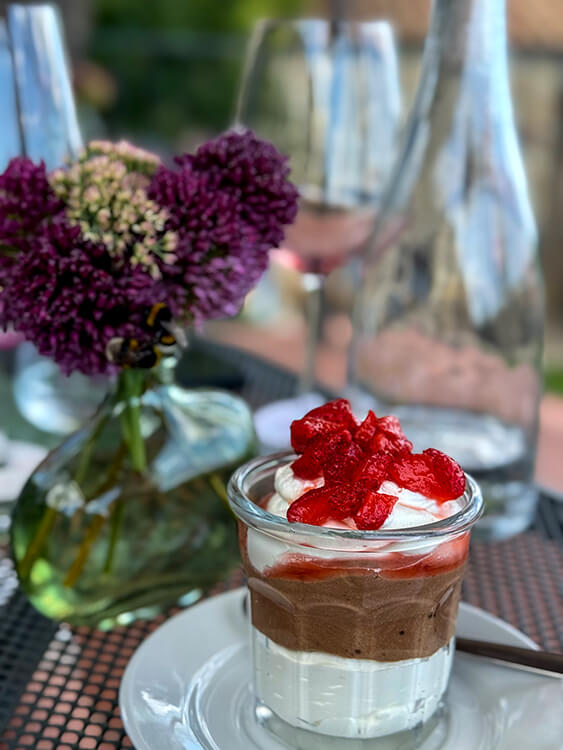
The three course lunch finished off with a refreshing panna cotta with strawberries.
I highly recommend the winery tour and classic lunch, but if you do just happen to find yourself in the area of Querceto di Castellina and haven’t reserved a tour with lunch in advance, you can still enjoy wines, cheese and crostini without reservation at their LIVIA Wine & Cheese Bar on the terrace. It is open seasonally from May through October.
Stay at Querceto di Castellina
Querceto di Castellina is also an agriturismo, which is basically Italy’s best kept accommodation secret. They offer 9 apartments and a suite, which are spread out among the restored 15th century buildings surrounding the winery.
The 9 apartments all are decorated uniquely with Tuscan inspired decor. They range in size sleeping between 2 to 9 guests. All the apartments feature a fully equipped kitchen, coffee machine, patio, satellite tv and wifi, making the apartments a perfect choice for longer stays. Each apartment does have air conditioning, though some apartments only have air conditioning units in the bedrooms.
The suite is the only apartment that does not have a kitchen, but breakfast is included for guests booking the suite. The suite is the most recently renovated apartment and does have a Nespresso machine and patio.
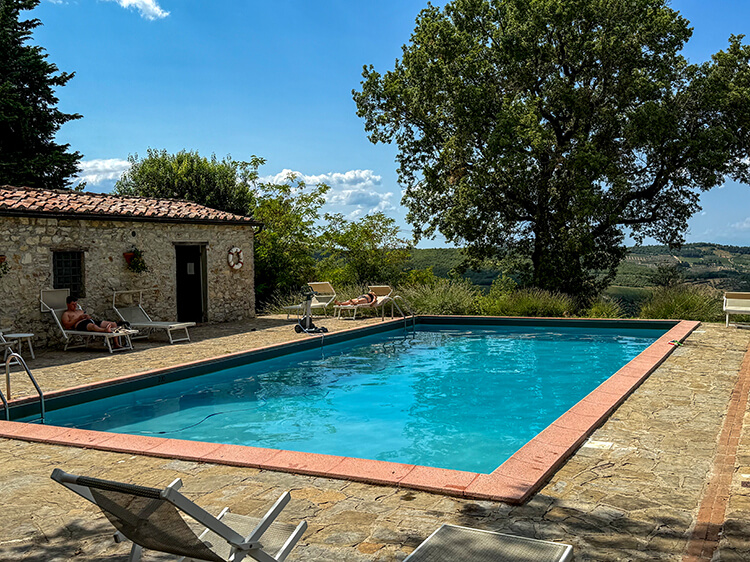
Guests also have access to a common laundry room, a BBQ and picnic area on the estate, ping pong table, and the salt water swimming pool. Guests are also offered a complimentary wine tasting.
Pets are welcome at Querceto di Castellina and stay free of charge.
Getting to Querceto di Castellina
Querceto di Castellina is located around 1 hour drive south of Florence. You’ll need a car to visit Querceto di Castellina and the area as the Chianti countryside is not served by trains and public transportation. You can easily rent a car at Florence-Peretola Airport if arriving by flight or from train stations like Firenze Santa Maria Novella or Statzione di Siena. Both train stations have major car rental desks such as Sixt and Hertz.
This article contains affiliate links. When you book on Expedia or DiscoverCars through our affiliate sites, we earn a small commission at no additional cost to you.
